Most people meet Larissa Station in a hurry. You land in Athens, there is a train to catch or a hotel to find, and suddenly you are standing on Domokou Avenue wondering whether this is even the right building.
It is. Larissa Station Athens has run as the city’s main railway station since 1904, and the only genuinely confusing thing about it is the name, which belongs to a city 350 km north rather than to Athens at all.
So here is the lot, in the order you are likely to need it: which trains actually run in 2026, what the metro will cost you, how you reach the airport, which lines are shut and what has replaced them, and the handful of things genuinely worth booking in advance before you go anywhere near a platform.
Larissa Station at a glance

Before any of the detail, here is the short version of Larissa Station Athens.
Officially the building is Athens railway station, though absolutely nobody uses that name. Everyone says Larissa Station, or Stathmos Larissis in Greek, and you will see it written as Σταθμός Λαρίσης on signs. It stands on Domokou Avenue in the Kolonos district and has done since 8 March 1904.
Underneath it all runs Metro Line 2, the red line, whose own Larissa Station stop opened back on 28 January 2000. Three different organisations share the place, which explains a lot about how it feels: Hellenic Train operates the trains, STASY runs the metro, and GAIAOSE owns the building itself.
A single metro ticket runs to €1.20 and stays valid for 90 minutes, which is generous by European standards. The station itself is staffed and step-free with parking on site, though during the current rebuild only three platforms and four tracks are actually in service.
Clear one thing up first. Athens had two main stations side by side until the old Peloponnese Station next door shut on 7 August 2005, after which Larissa took over its services, so any older guidebook pointing you towards a second station is simply wrong.
A word on what the place actually feels like, since the photographs online flatter it considerably. This is a working terminus in a working part of town rather than one of those grand European railway cathedrals. The hall is plain, the signage is bilingual but sparse, and half the building is currently behind hoarding. None of that matters much when your train is on time, though it does mean you should not budget an hour here as sightseeing.
Why it is called Larissa Station when it is in Athens

The name only makes sense once you know three things about it:
- It opened in 1904 and its main line ran north to the city of Larissa in Thessaly.
- Greek stations were named for their destination, not their location, so the habit stuck.
- Officially it is “Athens railway station”. Nobody calls it that, including the staff.
This trips up a lot of people at the booking stage. When a ticket site offers you “Athens” and “Larissa” as separate stations, those are genuinely different places: Athens is where you are standing, while Larissa sits three hours north and happens to be a stop on the way to Thessaloniki. Search by city rather than by station name and the problem disappears.
What catches people out here is the gap between how large the building looks from outside and how little of it is actually in use. You walk into a station built for a far busier railway era, and then you find three working platforms at the end of a corridor. It is slightly melancholy, honestly, and it tells you more about the state of Greek rail than any timetable does.
Getting to Larissa Station on the Athens metro

Almost everyone reaches Larissa Station Athens this way, and for good reason.
- Line 2, the red line, running Anthoupoli to Elliniko. The metro station opened on 28 January 2000.
- It is directly beneath the railway building, so you come up the escalator and you are there. No street crossing.
- Hours are roughly 05:30 to 00:30 most days. Fridays run later, with last trains through Syntagma around 02:00, and Saturdays run through the night.
- A 2026 caveat: rotating engineering work closes some red and blue line stations early, from 21:40 Sunday to Thursday, with replacement buses. Check before a late departure.
Worth knowing before you buy anything: your transport pass and your attraction tickets are separate purchases in Athens. Nothing bundles them. So sort the pass at the station, then book sights through Athens tickets or Athens combos where the savings actually are.
Athens metro and transport tickets: 2026 prices

Good news here. Athens runs one ticket across metro, bus, trolleybus and tram, so you buy once and stop thinking about it.
From Omonia you are four minutes away, two stops north on the red line, which makes it the quickest approach of all. Syntagma takes about ten minutes with a change at Syntagma itself onto Line 2, and Monastiraki runs to roughly twelve once you have changed at Omonia or Syntagma. Coming up from the Acropolis is simpler than it sounds, since Line 2 runs direct and takes around twelve minutes northbound.
Piraeus is the long one at about thirty-five minutes, taking Line 1 to Omonia and changing there. From the airport you have a choice: Line 3 to Syntagma then Line 2, which lands near fifty minutes, or the Suburban Railway straight into Larissa Station in about forty, which skips the metro entirely and is the one to take if you have an onward train.
Work out whether the 5-day pass suits you before anything else, because at eight euros twenty it undercuts seven single tickets, and you will rack up three or four journeys a day in Athens without even trying.
Who travels cheaper
- Under 6 — free, no ticket needed.
- Under 18, students under 25, over 65 — reduced fares, but you need a personalised ATH.ENA card, which you apply for at most metro stations. Carry ID, and students need a student card too.
- Everyone else pays full fare, including 16 and 17 year olds without the card.
Buy from the machines or the ticket window in any station, where cash and cards both work, though it is worth carrying a second card since the machines do occasionally sulk at one.
Validating is where people come unstuck, so scan the paper ticket at the reader and watch the arrows, because each gate only opens one way. Contactless has worked since January 2025, whether card, phone or watch, and the one rule that matters is remembering to tap out, since forgetting quietly costs you money.
One more thing about the metro, since it genuinely changes how you plan a day. Athens is a compact city with a small network, so almost everything a visitor wants sits within three or four stops of a red line station. That means you can treat Larissa as a hub rather than a place you have to escape from, which is not true of every big-city terminus.
Trains from Larissa Station: what actually runs in 2026

Most guides are out of date on what leaves Larissa Station Athens, so here is where things actually stand.
Two different railways share this building, and they behave nothing alike. Hellenic Train handles the long-distance InterCity services while the Athens Suburban Railway, the Proastiakos, covers everything local, and where the suburban side stays frequent and dependable, the long-distance side is a shadow of what it once was.
| Service | Route | Frequency | Journey |
|---|---|---|---|
| InterCity | Athens – Palaiofarsalos – Larissa – Thessaloniki | 2 return trips a day | About 5 hr |
| Suburban A1 | Piraeus – Athens – Athens Airport | Up to 18 return trips | About 40 min to the airport |
| Suburban A2 | Ano Liosia – Athens Airport | 24 return trips | Varies |
| Suburban A3 | Athens – Oinoi – Chalkida | 13 return trips | About 1 hr 20 |
| Suburban A4 | Piraeus – Athens – Corinth – Kiato | Up to 18 return trips | About 1 hr 30 to Kiato |
| Regional | Kiato – Aigio | 6 return trips | Connects onward from A4 |
Why the InterCity timetable looks so thin
Look at that first row again, because the 2026 timetable cut InterCity services to Thessaloniki while the infrastructure work drags on, and two return trips a day across 500 km is almost nothing. Book early. Turning up and hoping is not a plan on this route.
If you are weighing up whether to bother with trains at all, here is the honest framing. For getting around Attica, the suburban railway is excellent and cheap, and it will take you to the airport, to Piraeus for the ferries, and out to Corinth without any fuss. For getting across Greece, the network has been shrinking rather than growing, and buses now reach more places more often. Neither of those facts is obvious from the station building, which is why so many people arrive with the wrong expectations.
Athens to Thessaloniki by train

The numbers, in plain English. It is roughly 500 km from Athens to Thessaloniki, and the journey currently takes about five hours. When the faster InterCity Express ran, it managed closer to three hours fifty-five, though that is not what you will be booking in 2026.
The 2026 timetable gives you two return trips a day, run by Hellenic Train, leaving from Larissa Station and calling at Palaiofarsalos and Larissa city along the way. Fares sit around €30 to €50 depending on class and how far ahead you book.
The thin timetable makes more sense with a bit of background:
- Services stopped after the Tempi crash in February 2023.
- Limited trains returned that April, new signalling went in during September, and full service resumed in December 2023.
- Then Storm Daniel damaged more of the network, and repair work is still running.
- Two Hitachi tri-mode trainsets reached Thessaloniki for testing in July 2026, so the fleet is modernising. Do not plan around them yet.
Take the morning departure if you can, since it drops you in Thessaloniki around lunchtime with the whole afternoon still ahead of you, whereas the evening train gets in close to 23:00.
A quick reality check on the fares, because they are low enough to surprise people coming from northern Europe. A single journey costs about the same as a bottle of water, and five days of unlimited travel costs less than one airport transfer. Whatever else Athens charges you for, moving around is not it.
The Suburban Railway, and why it matters more than the InterCity

For most visitors the Proastiakos turns out to be the genuinely useful railway here, and it runs from the same building. It opened on 30 July 2004 and was electrified exactly thirteen years later, to the day, on 30 July 2017. Four lines touch Athens, of which three earn their place:
- A1 to the airport — the direct train from Larissa Station to Athens International, no metro change needed.
- A1 to Piraeus — for ferries to the islands, in the opposite direction.
- A3 to Chalkida — a real day trip, roughly every two hours, with an extra weekday afternoon service.
- A4 to Corinth and Kiato — the gateway to the Peloponnese, up to hourly.
Once you leave the Athens zone, suburban tickets stop using the flat metro fare, so price your actual destination rather than assuming €1.20 covers it.
Getting to Athens Airport from Larissa Station

Three ways from Larissa Station Athens to the airport, and which suits you comes down to luggage and budget.
The Suburban Railway A1 goes direct in about forty minutes and costs the standard suburban fare, which makes it the best option whenever the train times line up with yours. Failing that, take Line 2 to Syntagma and change to Line 3, roughly fifty minutes door to door at €9 single or €16 return. It runs more often, so it is easier to plan around.
A taxi or ride-hail takes anywhere from thirty-five minutes to an hour depending on traffic, charges the fixed airport tariff, and genuinely earns its cost if you have heavy bags or a flight before dawn. The express bus X95 is the cheap fallback at sixty to ninety minutes, though it leaves from Syntagma rather than from the station.
First airport metro leaves at 06:10, last at 23:34. Flight outside that window? The X95 bus runs round the clock from Syntagma, or you call a taxi.
A small thing that saves real money. The €16 airport return undercuts two €9 singles, so buy it on arrival if you already know you are flying out of Athens.
Lines that are not running, and what replaces them

I have put this section in because it is probably the most useful thing here, and almost nobody else publishes it.
A good chunk of the Greek network is shut for reconstruction after the 2023 floods and the crash. Planning around a train you read about somewhere older? Check this table before you commit.
| Route | Status | Replacement | Expected back |
|---|---|---|---|
| Palaiofarsalos – Kalambaka (Meteora) | Suspended since 2023 | Replacement buses | 2028 |
| Volos – Larissa | Suspended since the 2023 floods | Replacement buses | 2028 |
| Aigio – Patras | Under reconstruction | Buses from Aigio | 2028 |
| Patras – Pyrgos – Kyparissia | Suspended since 2011 | None | No date |
| Alexandroupoli | Suspended since 2021 | Buses, freight only on rail | No date |
| All international routes | Suspended since 2020 | None | No date |
Read the last row twice. Greece has no international passenger rail connections at all right now. Not to Sofia, not to Skopje, not to Istanbul, nowhere. Plenty of travel sites still imply otherwise.
Meteora is the one that stings, since the monasteries are on everyone’s list and the direct train no longer reaches Kalambaka. Bus or guided trip is the practical answer. We run a Meteora monasteries full-day trip that handles the transport for you.
A quick orientation point while you are reading timetables. The red line links Larissa Station to almost every major site in under fifteen minutes, so your station is rarely more than one ride from whatever you booked. Browse Athens landmarks and Athens museums to see what sits on that line.
How to buy train tickets at Larissa Station

Four ways to buy tickets at Larissa Station Athens, roughly ranked by how much hassle each spares you.
- Hellenic Train online or in the app — cheapest and safest for InterCity. Seats are limited on a two-trains-a-day route, so this is the one to use.
- Ticket office at the station — staffed, and fine for suburban journeys or same-day travel. Expect a queue at peak times.
- Vending machines — quick for suburban and metro tickets.
- Third-party sites — convenient if you are bundling, but compare the total, because booking fees stack up.
Inside Athens, neither the metro nor the Proastiakos needs pre-booking. Walk up, buy, validate, go.
For Thessaloniki, book ahead. Two departures a day sell out in summer and around Greek public holidays, and there is no standby.
Keep your ticket until you leave the station at the far end, since inspectors check on board and at some exits.
Inside the station: facilities and what to expect

Functional rather than beautiful, is the honest verdict on Larissa Station Athens. Two floors, staffed, step-free, parking outside.
| Facility | Available? | Notes |
|---|---|---|
| Staffed ticket office | Yes | Queues at peak hours |
| Step-free access | Yes | Lifts to platforms |
| Parking | Yes | On site |
| Cafes and kiosks | Yes | Basic, so eat before a long journey |
| Left luggage lockers | No | Use a nearby storage service instead |
| Cycle parking | No | None provided |
| Bus and trolleybus links | Yes | Several routes on nearby streets |
| Rail replacement buses | Yes | They leave from the eastern forecourt |
| Metro interchange | Yes | Line 2, directly beneath |
That eastern forecourt detail matters more than it sounds, because several routes are bus-replaced right now. If your ticket says bus, you want the east side of the building, not the platforms.
Luggage storage near Larissa Station

There are no left-luggage lockers inside Larissa Station Athens, which surprises people arriving on an early train with a late flight.
What works instead:
- Third-party storage networks operate around Omonia, two metro stops away on the red line, with shops and hotels acting as drop points.
- Prices typically run per bag per day, booked through an app, and most are open long hours.
- Many Athens hotels will hold bags before check-in or after check-out for free, even on the day you leave. Ask rather than assuming.
If you are doing a day trip and coming back to the same hotel, the hotel option is almost always the easiest and the cheapest.
The station rebuild: what is changing

If parts of the station look like a building site, that is because they are.
A second-phase upgrade contract worth €42.1 million was signed on 12 July 2022. It covers rebuilding and electrifying the platforms for tracks 1 to 6, replacing the underground passage, restoring the historic building and reorganising the road traffic outside.
While the work runs, trains use the platforms completed in the earlier phase. Sources disagree on the counts, which tells you how fluid it is: the station is listed as having eight platforms with five operational, while the detail says three platforms and four tracks are actually in use.
The project was still listed among active Greek railway works in 2025, with no published completion date. So expect hoardings, expect your platform to move, and check the departure boards rather than trusting last year’s photos.
Is the Larissa Station area safe?

Worth addressing honestly, because people ask about Larissa Station Athens and its neighbourhood constantly.
The station sits in Kolonos, near Omonia, and this part of central Athens has a rougher reputation than the Plaka or Kolonaki. In practice it is a working transport district rather than a dangerous one, and the station itself is staffed and busy.
Sensible precautions, the same as any big European terminus:
- Keep bags closed and in front of you on crowded platforms and metro escalators.
- Pickpocketing is the realistic risk, particularly on Line 2 and around Omonia. Violent crime against tourists is rare.
- The streets immediately around the station are quieter and less pleasant late at night, so take a taxi after dark rather than walking.
- Stick to the metro entrance and the main forecourt rather than cutting through side streets with luggage.
If you are choosing a hotel purely on price and the map says Omonia or Metaxourgeio, read recent reviews carefully before booking. The area improves considerably a few streets in either direction.
If you are deciding how long to give Athens before heading north, two or three full days covers the classics comfortably. Our historical landmarks guide and European summer destinations roundup both help if Greece is one leg of a bigger trip.
Where to stay near Larissa Station

| Area | Walk or ride | Suits | Trade-off |
|---|---|---|---|
| Metaxourgeio | One metro stop | Budget, and a genuinely interesting food scene | Patchy street by street |
| Omonia | Two stops | Cheap rooms, central transport | Busiest and least charming |
| Monastiraki | Three stops | First-timers, walkable to everything | Noisy at night |
| Syntagma | Four stops | Airport metro, upmarket hotels | Priciest |
| Koukaki | Line 2 south, about 15 min | Quiet, near the Acropolis | Further from the station |
| Plaka | Via Monastiraki | The postcard Athens | Tourist pricing |
Honest advice: unless you have a dawn train, do not pick your hotel to be near Larissa Station. The red line puts you there in ten minutes from almost anywhere central, and you will have a far better stay in Monastiraki or Koukaki.
Day trips you can actually do by train from Athens

Given the closures above, here is what still works on rails out of Larissa Station Athens.
| Destination | Line | Journey | Why go |
|---|---|---|---|
| Chalkida | Suburban A3 | About 1 hr 20 | Seaside town on Evia, famous for its strange tidal current |
| Corinth | Suburban A4 | About 1 hr | Ancient Corinth and the canal |
| Kiato | Suburban A4 | About 1 hr 30 | Gateway to the northern Peloponnese |
| Aigio | A4 then regional | About 2 hr 15 | Quiet gulf-side town, connects onward by bus |
| Larissa city | InterCity | About 3 hr 5 to 3 hr 27 | Thessaly, and a change point for the north |
| Lamia (Leianokladi) | InterCity | About 2 hr 24 | Central Greece, mountains and Thermopylae |
| Thessaloniki | InterCity | About 5 hr | Greece’s second city, better as an overnight than a day trip |
Chalkida is the one I would pick for a single free day. It is cheap, it is genuinely a train ride rather than a slog, and the Euripus Strait reverses direction several times a day, which is odd enough to be worth seeing.
For everything else, the honest answer is that buses and organised trips now cover more of Greece than the trains do. Our Athens day trips page lists what runs without a railway.
What to book instead when the train does not go there

Three of the classic Greek trips are no longer reachable by direct train. Here is the practical workaround for each.
| You wanted | Rail status | Book this instead |
|---|---|---|
| Meteora monasteries | Line suspended to 2028 | Meteora full-day trip |
| Delphi | Never had a rail link | Delphi day trip with entry tickets |
| Mycenae and Epidaurus | No passenger rail | Nafplio, Mycenae and Epidaurus tour |
| Cape Sounion | No rail link | Temple of Poseidon sunset trip |
| The islands | Ferry from Piraeus | Hydra, Poros and Aegina day cruise |
For the islands specifically, take the A1 suburban train from Larissa Station down to Piraeus and pick up a ferry, or book a day cruise with hotel transfers and skip the logistics entirely. There is also a version with a Greek lunch included.
Your first day in Athens, arriving at Larissa Station

A plan for anyone stepping off a train at Larissa Station Athens with a bag and no idea where to start.
- Drop the bag first. Hotel storage if you can, a storage app near Omonia if not. Do not drag luggage round the Acropolis.
- Buy a 5-day pass at the station machine for €8.20 while you are already underground.
- Red line south to Acropolis, about 12 minutes, and start with the hill before the afternoon heat and the cruise groups.
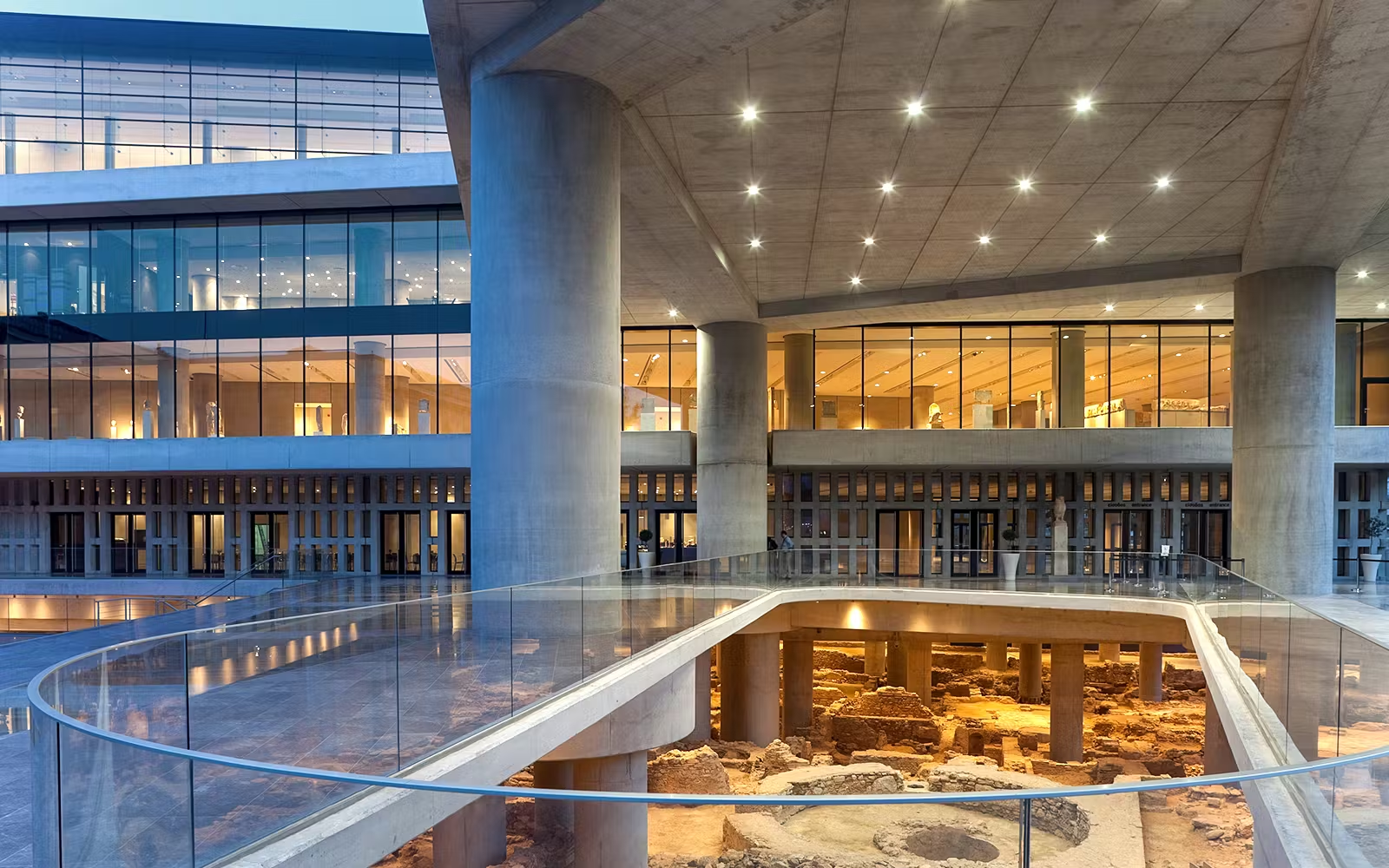
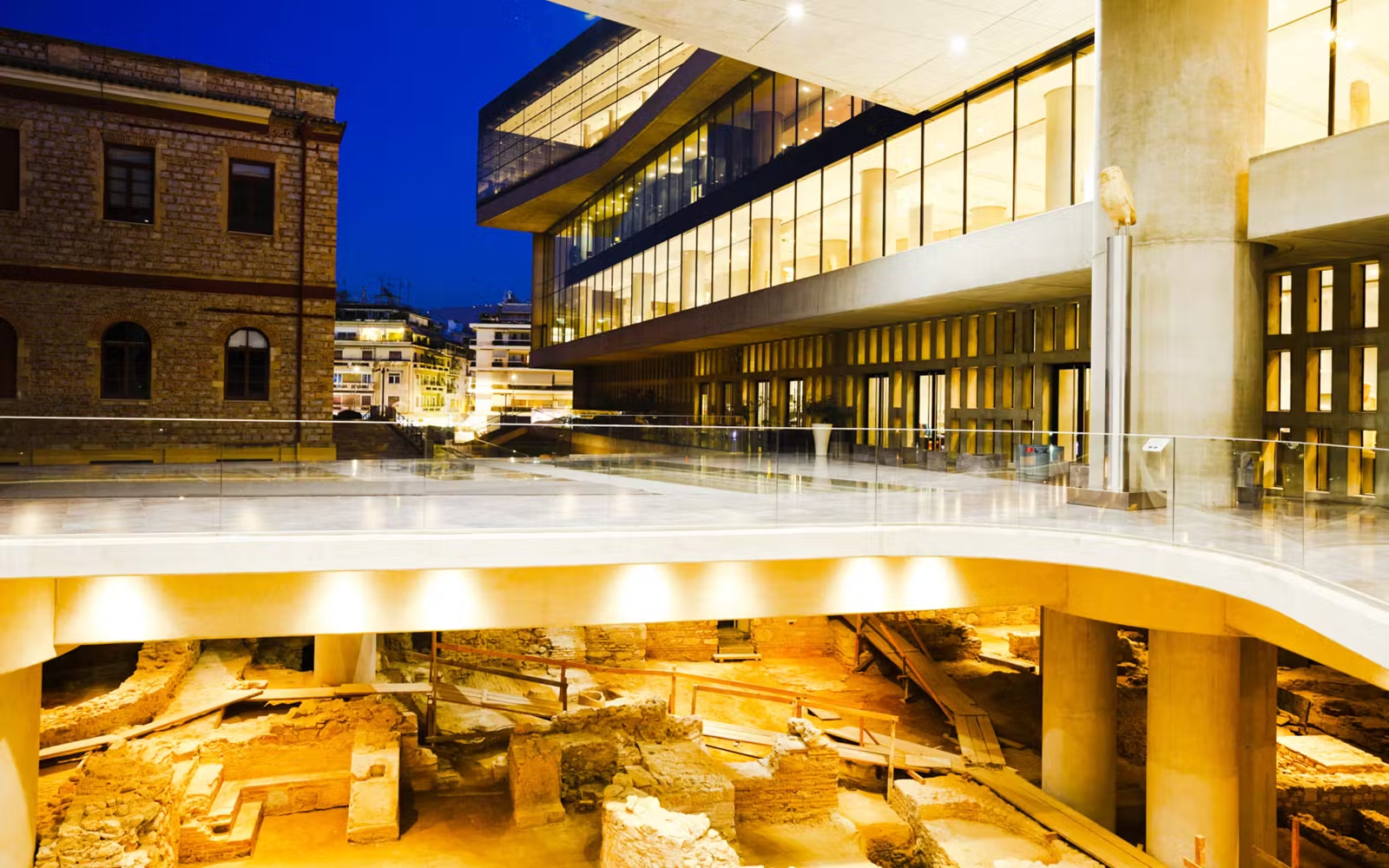
- Acropolis Museum next, ten minutes downhill, and air conditioned.
- Walk to Monastiraki through Plaka for lunch, then the flea market.
- Finish at Syntagma for the changing of the guard, then back on the red line.
Book the Acropolis before you arrive. Timed entry sells out in season and the queue at the gate is genuinely long. Acropolis and Parthenon guided tours with entry tickets handle both the ticket and the context, or take entry tickets with an audio guide if you would rather go at your own pace.
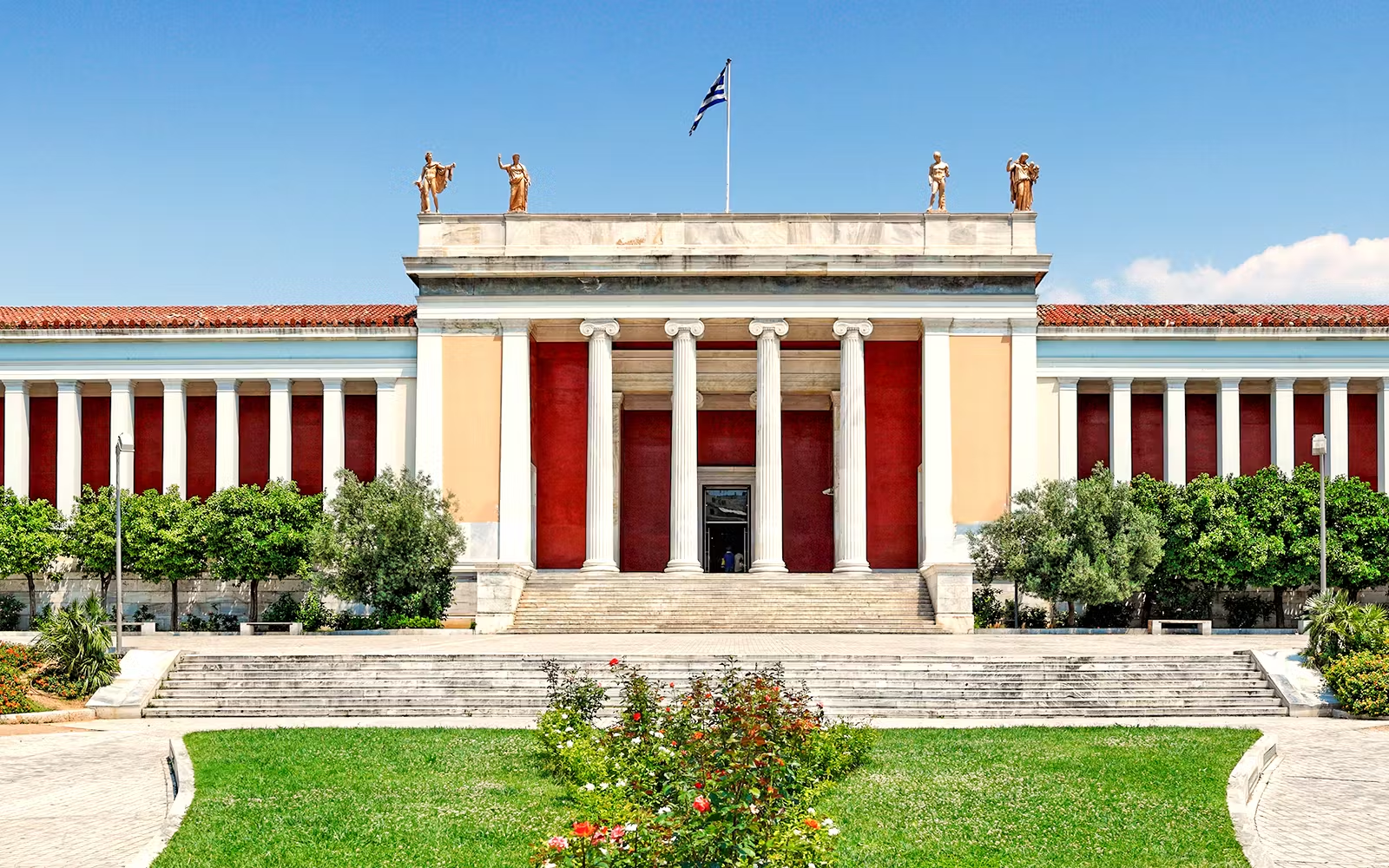
Pairing the hill with the museum is the standard move, and the Acropolis plus Acropolis Museum combo saves a step. If you have more time, the combo with the National Archaeological Museum saves around 7 percent, and that museum is four stops from Larissa Station on the red line.
Other things worth booking in Athens

Beyond the Acropolis, a short list of what earns its ticket price.
| Experience | Why | Book |
|---|---|---|
| National Archaeological Museum | The best collection in Greece, and closer to Larissa Station than the Acropolis is | Tickets with audio guide |
| Ancient Agora | Where Socrates actually argued, and far quieter than the hill above | Entry tickets |
| Temple of Olympian Zeus | Fifteen columns left of 104, and a five-minute walk from Syntagma | Skip-the-line tickets |
| Hop-on hop-off bus | Covers Athens, Piraeus and the coast over two days | 2-day ticket |
| Athens food tour | The quickest way to understand the city | Culinary experience |
| Street food tour | Cheaper, and just as good | Street food tour |
| Museum of Illusions | A rainy-afternoon option with kids | Skip-the-line tickets |
Browse the lot on things to do in Athens, or check Athens specials and the deals page for current combo savings. Our Acropolis visitor guide and things to do in Greece roundup go deeper if you are building a longer trip.
Travelling on to the islands afterwards? Crete and Santorini are flights or ferries rather than trains, and we have a Knossos Palace visitor guide for Crete plus a Santorini catamaran guide if you are heading that way. Full catalogue on Athens tours.
Practical tips most guides leave out

- Check the departure board, not your booking. Platforms move during the rebuild, sometimes late.
- If your ticket says bus, go to the eastern forecourt. Rail replacement services leave from there, not the platforms.
- Allow 20 minutes to change from the metro to an InterCity if you have luggage. The lift queue is real.
- There is no left luggage in the station. Sort it before you arrive.
- Suburban fares are not the €1.20 flat fare once you leave the Athens zone. Price your actual destination.
- Tap out with contactless. Forgetting costs you.
- Summer platforms get hot. Buy water before you board, since not every train has a trolley.
- Greek public holidays wreck timetables. Easter week especially, and it moves each year.
Larissa Station Athens: FAQs

Larissa Station, officially Athens railway station, is on Domokou Avenue in the Kolonos district of central Athens. It is directly above the Larissa Station stop on Metro Line 2, the red line, about four minutes from Omonia and roughly ten minutes from Syntagma.
Because the main line from the station originally ran north to the city of Larissa in Thessaly, and Greek stations were often named for their destination. The station opened on 8 March 1904 and the nickname stuck, even though its official name is Athens railway station.
Line 2, the red line, which runs between Anthoupoli and Elliniko. The metro station opened on 28 January 2000 and sits directly beneath the railway building, so there is no street crossing between the two.
A single 90-minute ticket costs €1.20 and covers metro, bus, trolleybus and tram with unlimited changes. A 24-hour pass is €4.10 and a 5-day pass is €8.20. The airport metro is separate at €9 single or €16 return.
Yes, two ways. Suburban Railway Line A1 runs direct from Larissa Station to the airport in about 40 minutes. Or take Line 2 to Syntagma and change to Line 3, which takes around 50 minutes and costs €9 single. The airport metro runs 06:10 to 23:34.
More Larissa Station questions
About five hours on current timetables, with two return InterCity trips a day in the 2026 schedule. Fares typically run €30 to €50. Services were cut back because of infrastructure work, so book ahead rather than turning up.
Not directly. The Palaiofarsalos to Kalambaka line has been suspended since 2023, with replacement buses running instead, and reopening is planned for 2028. Most visitors take a bus or a guided day trip to reach the monasteries.
No. All international passenger rail services from Greece have been suspended since 2020, so you cannot take a train from Athens to Bulgaria, North Macedonia, Turkey or anywhere else. Flights and buses are the only options.
No, the station has no left-luggage lockers. Third-party storage services operate around Omonia, two metro stops away, and most Athens hotels will hold bags before check-in or after check-out, usually free.
It is a busy working transport district rather than a dangerous one, and the station is staffed. Pickpocketing is the realistic risk, especially on Line 2 and around Omonia. The surrounding streets are quieter late at night, so take a taxi after dark rather than walking with luggage.
The bottom line
Larissa Station Athens is easier than it looks. One building, one metro line underneath, and a ticket system that costs €1.20 a journey.
The complications are not the station, they are the network around it. Fewer InterCity trains than there used to be, several lines closed until 2028, and no international services at all. Plan around that and you will be fine.
Book the long-distance trains early, buy the 5-day transport pass on arrival, and sort your luggage before you get there. For everything you do once you are in the city, start with things to do in Athens and the Athens tickets catalogue.
And if the train you wanted is one of the suspended ones, do not waste the day proving it. Book the bus or the tour and go.