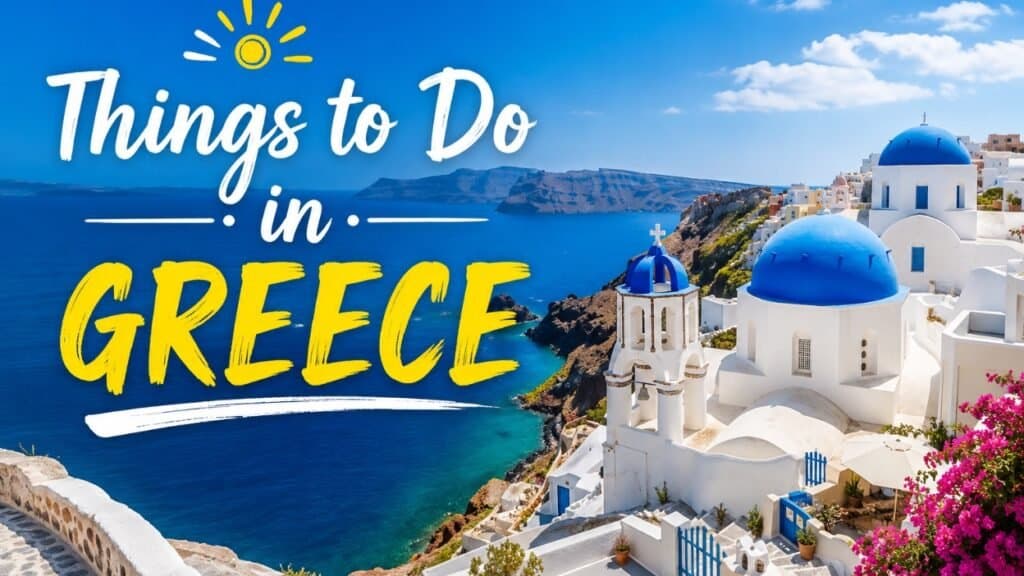
Some countries meet your expectations. Greece blows straight past them. You arrive with a mental image built from years of photographs — crumbling columns, impossibly blue water, sunsets that look...
Some countries meet your expectations. Greece blows straight past them. You arrive with a mental image built from years of photographs — crumbling columns, impossibly blue water, sunsets that look too good to be real — and somehow the real thing still catches you off guard.
That is the strange magic of this place. These are not just sights to check off a list — they are the kind of experiences that stay with you long after you have come home. Whether it’s your first trip to Greece or your fifth, it never really matters. Greece always finds a way to surprise you.
Why Should Greece Be at the Top of Your Travel List?
There are few countries that pack this much into one place. On the mainland, you have got cities layered with thousands of years of history. Offshore, more than 200 inhabited islands, each with its own personality. In between, mountain villages, gorges, ancient sanctuaries, and water so clear you can see the seabed from a boat.
What makes Greece stand apart from other European destinations is the way it wears all this so naturally. The Greecetouristattractions here are not roped off in some sterile way — they are woven into the fabric of daily life.
You wander past a 2,000-year-old ruin on your way to grab coffee. Dinner happens on a terrace with a Byzantine castle sitting right there in the view. That layering — ancient and ordinary, old world and everyday life — is not something you can fake or recreate anywhere else. Greece just has it, in abundance.
Best Places to Visit in Greece
There is a reason people freeze up when planning a Greece trip: too many islands, not enough clarity on where to start. Here is a simple breakdown of the top spots, and which type of traveller each one fits best.
Acropolis & Parthenon and Temple of Olympian Zeus: Athens’ Ancient Icons
If you only have one day in Athens — though we would strongly argue you need more — spend it moving between these two sites. They are a short walk from each other, and together they make for one of the most remarkable mornings you will have anywhere in Europe.
Start at the Acropolis. The hill has been inhabited since the Neolithic period, but it is the Parthenon — the great marble temple dedicated to Athena, built in the 5th century BC — that stops people in their tracks. Photos do not prepare you for the scale of it.
The columns are vast, the stonework is meticulous even after 2,500 years, and standing up there with Athens spread out below you, you get a real sense of why this city mattered so much to the ancient world. It was the beating heart of democracy, philosophy, and art all at once.
Go early, before the tour groups arrive and before the sun turns the hillside into a furnace. Grab your Acropolis & Parthenon tickets through TickYourList in advance — the queues in peak season are no joke. And before you leave the area, take half an hour to wander through Plaka.
Cobblestone streets, old neoclassical buildings, little tavernas tucked into corners — it is as atmospheric as Athens gets. From there, walk southeast and you will find the Temple of Olympian Zeus, a site that doesn’t get the attention it deserves. Here is the backstory: construction started in the 6th century BC under the tyrant Peisistratus, then stalled. And restarted. And stalled again.
Roman general Sulla looted part of it. Eventually, Emperor Hadrian finally finished the job in 132 AD — 700 years after the first stone was laid. Of the original 104 Corinthian columns, each one standing 17 metres tall, only 15 are still upright today. One lies on the ground exactly where a storm dropped it in 1852.
There is something quietly haunting about standing in the shadow of those remaining columns, knowing what this place was supposed to become. So, pick up your Temple of Olympian Zeus tickets through TickYourList and make sure you stop at Hadrian’s Arch next door — the grand Roman gateway that once separated ancient Athens from the new city Hadrian built around it.
Best Things to Do in Greece for First Timers
First time in Greece? Here is what’s genuinely worth prioritising — not a breathless list of everything, just the experiences that matter.
Firstly, do not rush Athens. The classic mistake is one day in the capital, then straight to the islands. Athens deserves at least two or three days. The Ancient Agora, the National Archaeological Museum, Monastiraki market on a Sunday morning, a sunset from the top of Lycabettus Hill — the city rewards slowness. Give it time and it gives you a lot back.
Next, go to Oia for the sunset. Every travel writer says this, and every travel writer is right. Yes, it is busy. Yes, the streets fill up an hour before the sun goes down. It does not matter. Watching the light turn the caldera gold and then drop into the Aegean is one of those travel moments that lives with you. Do not skip it trying to be contrarian.
Take at least one ferry. Island-hopping by ferry sounds like a logistical chore but it is genuinely one of the best things about travelling Greece. Standing on deck as the islands come and go on the horizon, the water shifting between shades of blue — it is effortlessly beautiful. Book a window seat if you can, or just stand outside.
Eat properly. And by that we mean: slow down, order what looks unfamiliar, ask what the taverna has been making that morning. Grilled fish caught the same day. Bread that arrives still warm, oil pooled in the dish. A village salad buried under a thick slab of feta. Slow-cooked lamb that has been in the oven since dawn. Greek food does not need to be fancy to be extraordinary.
Finally, see Meteora. Four hours from Athens by train or car, and worth every minute of it. Monasteries balanced on top of sheer rock pillars, some of them inhabited since the 9th century. It looks like something from a film set, except it is entirely real. UNESCO listed it for good reason — nothing else in Greece looks quite like it.
Unique Things to Do in Greece Beyond the Obvious
Once the main boxes are ticked, Greece opens into something else entirely. These are the unique things to do inGreece that most visitors miss — and that tend to become the parts people talk about most when they get home.
Hike the Samaria Gorge, Crete. This is Europe’s longest gorge — 16 kilometres cutting through the White Mountains before spitting you out onto a pebble beach on the Libyan Sea. It’s a serious walk, so plan for a full day, but the scenery makes up for the effort. Towering rock walls, pine forest, a river that keeps vanishing and reappearing as you go. And that beach at the end feels properly earned.
Sail around Milos. Most people only know Milos as the island where the Venus de Milo turned up. What they are missing is the coastline — sea caves, volcanic rock arches, hidden coves you can only reach by boat. Spend a day out on a sailboat or catamaran here, and you’ll find it’s one of those quietly spectacular experiences that just doesn’t get talked about enough.
Futhermore, find Zagorohoria. In the mountains of northwestern Greece, a cluster of traditional stone villages connected by old paths and overlooking the Vikos Gorge — one of the deepest gorges in the world. It feels completely removed from the Greece most tourists see. If you want somewhere that still feels genuinely undiscovered, this is it.
See a show at Epidaurus. The ancient theatre here is the finest preserved in Greece, and the acoustics are genuinely astonishing. Every summer the festival brings theatre companies from around the world to perform here. Watching a play under the stars in a 4th-century BC amphitheatre is one of those experiences that is hard to put into words.
Visit Delphi. High on the slopes of Mount Parnassus, the sanctuary of Apollo was once considered the centre of the world. Pilgrims came from across the ancient Mediterranean to hear the Oracle’s prophecies. The ruins are dramatic, the setting is dramatic, and the views down over the Gulf of Corinth are spectacular. Moreover, it is a half-day trip from Athens and one of the most atmospheric sites in the whole country.
Practical Tips for Visiting Greece
A few things to know before you go:
Best time to visit: Aim for April to June or September to October — the weather’s warm enough for the beach, crowds thin out, and also prices drop noticeably. July and August are peak seasons: hotter, busier, more expensive, but there’s an undeniable buzz to being there when everything’s in full swing.
Getting around: Ferries are how you get around the islands — they’re the real backbone of travel here. Covering longer distances is easy too, thanks to Greece’s solid network of domestic flights. If you are sticking to the mainland, renting a car opens up a lot more freedom, especially for reaching places like Delphi, Meteora, or the Peloponnese.
Language: You will get by fine with English in most tourist areas, but picking up a few Greek words goes a long way. Try kalimera (good morning), efharisto (thank you), or parakalo (please) — locals notice the effort, and it tends to warm things up a bit.
Currency: It’s the euro everywhere. Cards are accepted without issue in cities and the bigger tourist spots, but keep some cash on hand once you venture into smaller villages or local markets.
Book ahead for major sites: Spots like the Acropolis and the Temple of Olympian Zeus fill up quickly, so it pays to plan ahead. Booking through TickYourList means skipping the long queues and just getting to enjoy being there.
To Sum Up
Greece is famous, and it earns every bit of that reputation. But the thing that surprises people most is not the landmarks — it is everything in between. The conversation with a restaurant owner who ends up recommending a village you had never heard of. The beach you stumble onto because you took a wrong turn.
The moment at some ancient site, late in the afternoon when the crowds have thinned, when you feel the actual weight of all that history pressing down. The best things to do in Greece are easy enough to find. So, start with the Acropolis, a ferry ride, and a long lunch by the water. Then let the country take it from there. Greece is good at the rest.
FAQs
What are the best things to do in Greece?
The best things to do in Greece include visiting the Acropolis, exploring Santorini, island hopping, touring Meteora, discovering Delphi, relaxing on Crete’s beaches, and enjoying authentic Greek cuisine in traditional tavernas.
How many days do you need in Greece?
A 7 to 10-day trip is ideal for first-time visitors. This allows time to explore Athens, visit one or two Greek islands, experience historical landmarks, and enjoy beaches, local food, and scenic ferry journeys.
What is the best time to visit Greece?
The best time to visit Greece is between April and June or September and October. These months offer pleasant weather, fewer crowds, lower prices, and also ideal conditions for sightseeing, island hopping, and outdoor activities.
Is Greece good for first-time travelers?
Yes. Greece is perfect for first-time visitors thanks to its rich history, beautiful islands, reliable ferry network, welcoming locals, delicious cuisine, and famous attractions like the Acropolis, Santorini, and Meteora.
Which Greek island should I visit first?
Santorini is the most popular first choice for its iconic sunsets, whitewashed villages, volcanic cliffs, and stunning caldera views. Also, Crete and Mykonos are excellent options depending on your travel style.
Can you island-hop in Greece?
Yes. Greece has an extensive ferry network connecting hundreds of islands. Travelers can easily island-hop between destinations like Santorini, Mykonos, Crete, Milos, and Rhodes while enjoying scenic journeys across the Aegean Sea.
Is Greece expensive to visit?
Greece can suit most budgets. While Santorini and Mykonos are more expensive, many mainland destinations and islands offer affordable accommodation, local restaurants, public transport, and free or low-cost historical attractions.