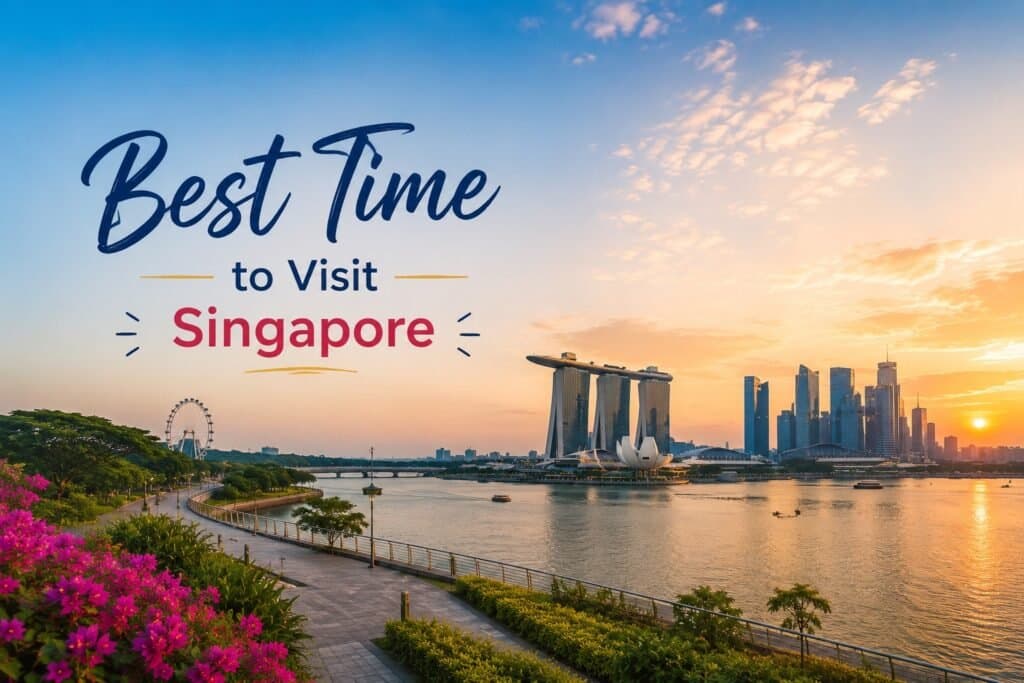
Trying to figure out the best time to visit Singapore? Good news first: Singapore sits almost right on the equator, so there is genuinely no bad month to book. But — and it’s a real but — if you are hoping for the driest skies, the smallest crowds, or you want your trip to line up with a festival worth seeing, the month you pick still matters more than you’d guess.
So let’s take a proper walk through Singapore’s weather, month by month, call out the events actually worth planning your dates around, and figure out which timing suits the way you like to travel.
Why Doesn’t Singapore Really Have “Seasons”?

Singapore doesn’t do the sharp summer-winter split you might be used to — it just stays warm and humid, pretty much year-round. Singapore’s National Environment Agency puts the average annual temperature at around 27°C, with lows rarely dipping below 23°C and highs usually capping out near 32°C.
So, there is no cold month to dodge and no single “perfect week” to chase. Pack the same light clothes whether you land in January or July. What actually shifts are two monsoon patterns, and getting a handle on these is really the whole trick to timing this trip well. The Northeast Monsoon runs December through early March and brings the heaviest, most frequent rain of the year.
The Southwest Monsoon shows up between June and September, but with shorter, more localized afternoon storms instead. In other words, rainfall — not temperature — is what should really be steering your travel plans here. Humidity, for what it’s worth, stays fairly constant too, hovering in the 80-90% range, so that sticky feeling isn’t something you’re going to plan your way around entirely.
Best Time to Visit Singapore Month-Wise

A generic “anytime’s fine” answer does not help much once you are actually booking flights, so here is the real breakdown.
January–February: Still the tail end of the Northeast Monsoon, so expect a few showers, though February technically holds the title of driest month. Chinese New Year usually lands here too, filling Chinatown with lanterns, lion dances, and markets worth wandering through. If you are chasing a cultural moment alongside decent weather, this pairing is hard to beat.
March–May: Rain eases up noticeably, making this one of the more pleasant windows for walking around and hitting outdoor attractions. Humidity does creep up, though, and May tends to bring the year’s hottest days — so pack light, breathable clothing and expect to sweat a little if you are out and about past noon.
June–August: The Southwest Monsoon rolls in, which mostly means short, sharp afternoon downpours rather than rain that ruins the whole day. Mornings tend to stay dry, so it’s worth front-loading outdoor plans early and saving museums or malls for later. This is also when the Great Singapore Sale typically runs, and school-holiday crowds from several countries tend to pick up alongside it.
September–October: Rainfall stays fairly moderate, and this shoulder season quietly rewards you with fewer crowds and better hotel pricing. It’s underrated, honestly — less talked about than December or Chinese New Year, but genuinely one of the more comfortable and cost-effective times to go.
November–December: The Northeast Monsoon comes back around, and November usually brings the heaviest rain of the whole year. Even so, December stays wildly popular — Christmas light-ups along Orchard Road, year-end school holidays, and that citywide festive buzz are enough to make most visitors shrug off the odd downpour. Just expect higher hotel rates and busier attractions if you’re going this month.
Singapore Weather at a Glance

Skimming a table beats wading through paragraphs when you are planning, so here is the quick version:
| Period | Weather Pattern | Rainfall Level | Best For |
| Dec-March | Northeast monsoon | High [Nov-Dec peak] | Festive events, indoor attractions |
| Apr-May | Inter-monsoon | Moderate | Sightseeing, outdoor exploring |
| June-Sept | Southwest monsoon | Moderate [afternoon showers] | Morning activities, shopping sales |
| Oct-Nov | Inter-monsoon transition | Rising | Fewer crowds, better hotel rates |
| Year-round | Equatorial climate | Consistent humidity | Warm-weather travelers |
Timing It to Match How You Travel

Really, the “best” month for Singapore travelcomes down to what you are prioritizing. Trying to dodge rain altogether? February through April is your safest, driest bet. Chasing festive energy over clear skies? December’s light-ups and year-end buzz might be worth the odd shower. And if you are traveling on a budget, September through November often turns up better flight and hotel deals, mostly because it sits outside peak school-holiday windows across a lot of source markets.
If you are traveling with young kids, you will probably want the drier months — nobody wants to explain to a five-year-old why the outdoor plans got scrapped. But if you are solo, or traveling as a couple chasing a bit more energy, December’s buzz might be worth putting up with some rain for. Honestly, there is no “right” answer here — it’s just a trade-off between weather, crowds, and the kind of trip you are going for.
And here is the thing worth knowing: Singapore’s weather almost never ruins a trip outright. The rain shows up in short, hard bursts, not all-day washouts, so as long as you have got a mix of indoor and outdoor stops on your list, you’re covered no matter which month you end up traveling in.
Making the Most of It, Whatever Month You Pick

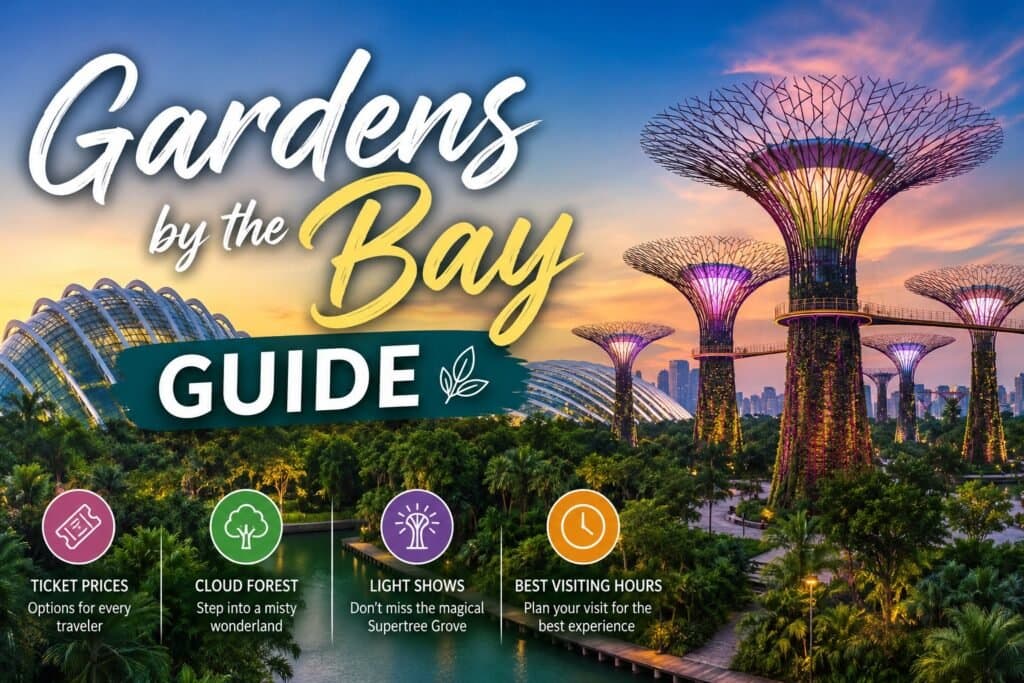
No matter when you show up, Singapore has enough indoor and covered attractions that a bit of rain rarely ruins your day. Gardens by the Bay’s domes are fully climate-controlled, Madame Tussauds Singapore sits entirely indoors, and Snow City is a genuinely refreshing detour on a hot, sticky afternoon — funny how a snow-cooled attraction ends up being one of the smartest moves in a tropical city.
Want thrills instead? Universal Studios Singapore blends covered rides with open-air ones, so a passing shower rarely shuts things down for long. Booking these ahead through a platform like TickYourList also means skipping the ticket queues, which matters even more during peak rainy hours, when everyone rushes indoors at once. Pairing something like Madame Tussauds in the morning with Gardens by the Bay’s domes in the afternoon keeps your day flexible no matter what the sky decides to do.