Nearly every list of things to do in Chicago reads as though somebody copied it off the back of a postcard, so this is the version written for a person who is actually going, actually paying for it, and would like to be told which of these earns the money and which is shut on the day they meant to turn up. Planning of that sort pays off here rather more than it does in most American cities, partly because so much of what is worth seeing sits inside a couple of miles of the river, and partly because the weather in this town can turn a perfectly good itinerary into a thoroughly miserable afternoon if you have given no thought whatsoever to where you intend to go when it does.
Everything in the top ten below is ordered by roughly how often people come away glad they bothered at all, which turns out not to be the same ordering you would get from ticket price, and definitely not the one you would get from counting how often a place shows up on Instagram. After the ten there is a section on hidden gems in Chicago that locals actually use, a run of indoor things to do in Chicago for the days the lake wind arrives sideways, and a practical bit on booking, because the gap between the cheapest sensible way to see this city and the most expensive one is well over a hundred dollars a head.
Two things to know before you start booking
Two things before the list starts, both of which matter more than they sound like they should: a couple of the best experiences in this city cost nothing whatsoever, and one of its most famous museums shuts on a Tuesday, which wrecks more carefully built itineraries than the weather does. Anyone who only came for the tickets can jump straight ahead and browse Chicago attractions and tours and come back.
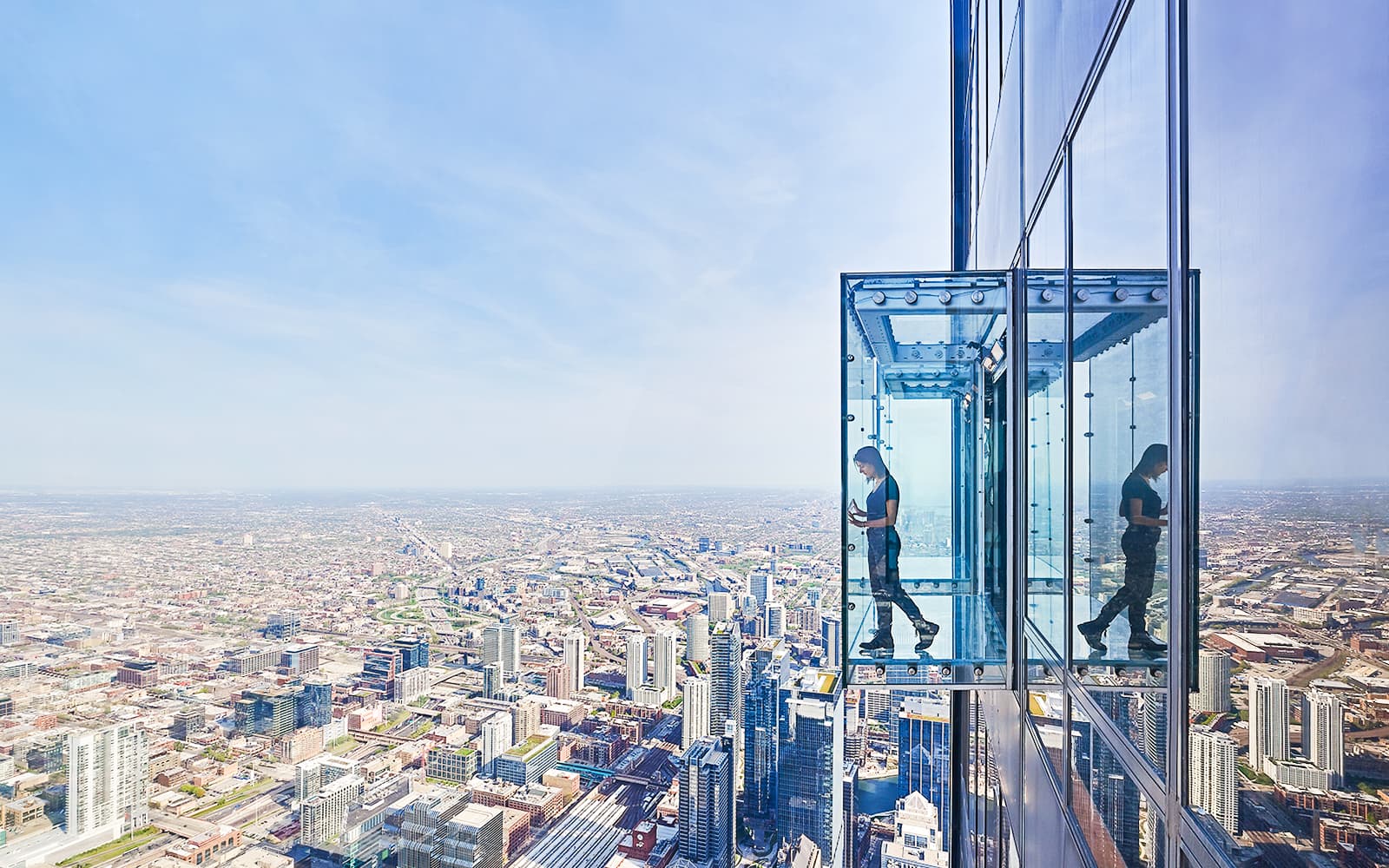
1. Stand on glass 1,353 feet up at Skydeck Chicago

Step onto The Ledge, which is one of the glass boxes bolted onto the side of the 103rd floor of Willis Tower, and there is a particular half-second in which your legs reach a decision your brain has not yet authorised. That is the whole product, really, and it is the reason this stays the single most booked thing on most people’s Chicago list despite being neither the cheapest nor the newest observation deck in town.
Up on the 103rd floor, The Ledge juts out over a street sitting 1,353 feet below you. Expect around $32 for an adult and $24 for children aged 3 to 11 on general admission, with under-threes free, and there is an Expedited Entry ticket from about $55 that exists purely because the queue here can be genuinely brutal in summer and over holiday weekends. Unusually for an attraction of this size it opens all 365 days, and through the winter months the hours sit at 9am to 8pm with Saturdays stretching on to 9pm, the last entry going half an hour before the doors shut.
Is Expedited Entry worth paying for?
Whether the expedited ticket is worth it depends entirely on when you go. On a wet Tuesday in February you will walk straight on and the extra twenty-odd dollars is money set on fire. In July, or any time between Christmas and New Year, the standard queue can eat ninety minutes of a day you are paying a lot of money to spend in Chicago. Book Skydeck Chicago tickets ahead either way, because walk-up availability is the first thing to go. You can check current Skydeck availability and prices or compare it against the city’s other observation decks in Chicago before committing.
Go late if you can. The hour either side of sunset gives you the city in daylight, then the whole grid lighting up underneath you, and you only pay once. Official hours and any closures are listed on the Skydeck visitor page.
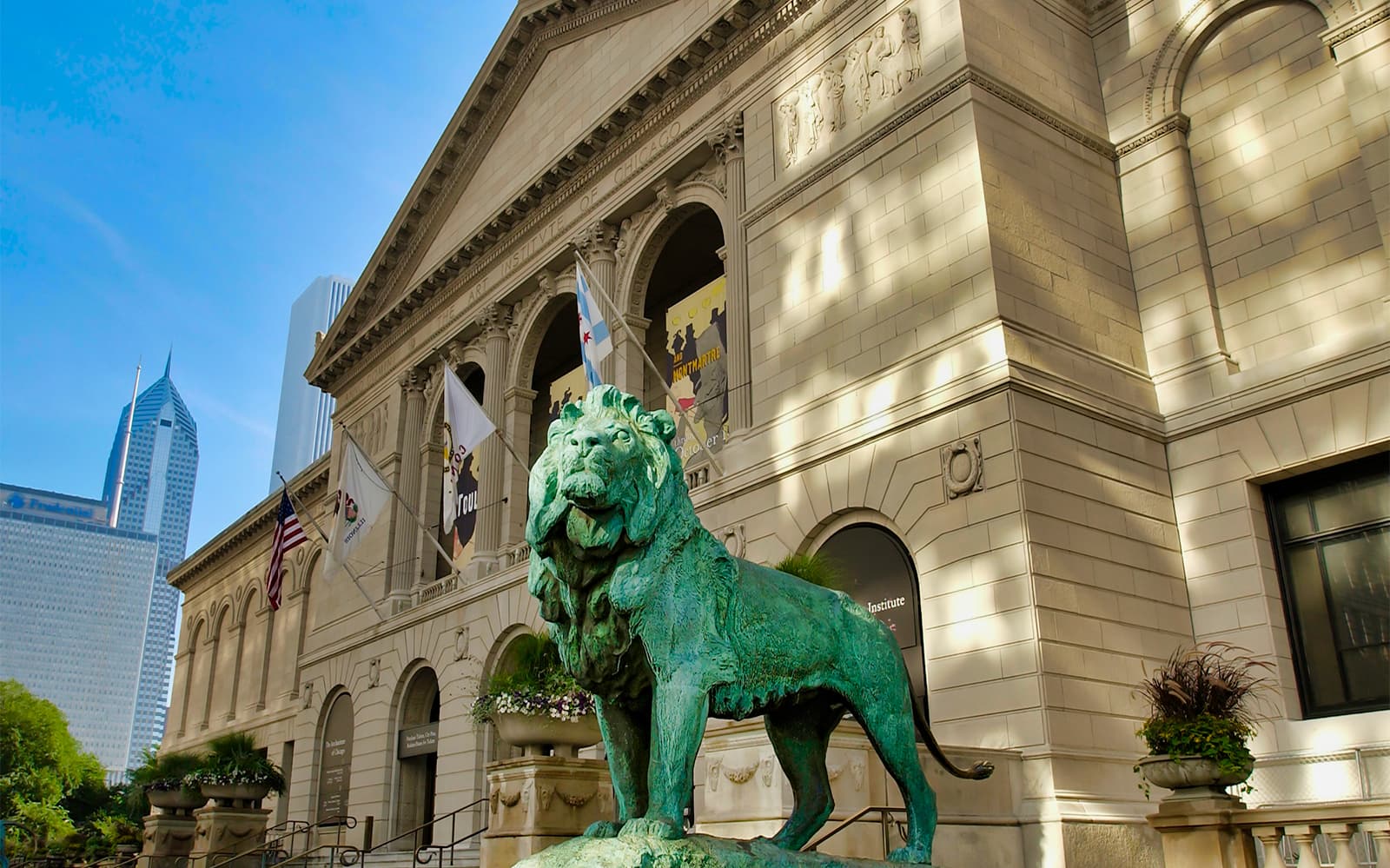
2. The Art Institute of Chicago, which is closed on Tuesdays

The warning goes first here, because this ruins more Chicago itineraries than bad weather manages to: the Art Institute shuts completely on Tuesdays. People build a whole day around it, arrive at eleven, and find themselves staring at two bronze lions and a locked door. The rest of the week it opens at 11am and closes at 5pm, except Thursdays when it stays open until 8pm, and it also closes on Thanksgiving, Christmas Day and New Year’s Day.
Pricing is where this one gets interesting, because the gap between what a tourist pays and what a local pays is enormous. General admission is $32 for adults and $26 for seniors, students and teenagers aged 14 to 17. Chicago residents pay $20 with proof of address, Illinois residents pay $27, and children under 14 get in free regardless of where they live. Chicago teenagers under 18 are also free, every day. There is a Fast Pass at $40 that skips the ticket line.
Free entry days for Illinois residents
Illinois residents have two genuinely free routes in, which is worth knowing if you have family in the state travelling with you: third Thursdays from 5pm to 8pm starting 16 April 2026, and Free Summer Thursdays on the same 5pm to 8pm slot from 11 June to 17 September 2026. Those evening slots are busy, obviously, but free is free.
As for what you are actually looking at, this is one of the handful of museums anywhere that genuinely earns a full day, and the Impressionist holdings alone would justify the trip. If you only have two hours, that is fine too, but go in with a plan rather than wandering, because the building is much bigger than it looks from Michigan Avenue. Buy Art Institute tickets with a timed slot rather than hoping, especially on Thursday evenings and weekends, and the Art Institute fast pass is the sensible option if you are visiting in peak season. Current hours and pricing sit on the museum’s own visit page.
3. Millennium Park and the Bean, which cost nothing

Being sniffy about Cloud Gate would be easy enough, given that it is the most photographed object in the Midwest and there is permanently a crowd underneath it doing the same upward-pointing phone thing. Resist that, because the sculpture is genuinely good, and the reason everybody photographs it is that it does something no photograph of it quite conveys, which is bend the entire skyline into a curve above your head while you walk underneath.
The Bean closed for the best part of a year while the plaza around it was rebuilt, and it has been back open to the public since. Entry to Millennium Park is free, permanently, as is Cloud Gate, the Crown Fountain with its two glass towers that spit water at children all summer, and the Pritzker Pavilion, which puts on free concerts through the warmer months.
Early morning is the move here. Get there before about nine and you will have the sculpture more or less to yourself, which is the difference between a nice photograph and a photograph with forty strangers in it. It is also right next to the Art Institute, which makes an obvious pairing for a half day of things to do in downtown Chicago without spending anything on transport.
4. Take an architecture cruise along the Chicago River

Forced to cut this entire list down to one thing, I would keep this, and I suspect that is not a controversial position among anybody who has actually been on one. The modern skyscraper was more or less invented here in the aftermath of the 1871 fire, and because the river runs straight through the middle of the result, you end up spending an hour or so drifting between the buildings while somebody who actually knows the subject explains why each one ended up looking the way it does.
A good deal of the appeal lies in how well the whole thing lands on people who had been fairly sure, right up until they boarded, that architecture was not something they cared about. You are on water, the skyline is doing its thing on both sides, and the commentary is pitched at normal humans rather than students. Cruises come in a few lengths and the choice matters more than people expect: the 45-minute cruise is a decent taster if you are short on time, the 90-minute river and lake version is the one that actually gets out onto Lake Michigan for the skyline view from the water, and there are dinner cruises if you want to make an evening of it.
Which cruise length to pick, and when they run
Two warnings. These do not run all year round, for the fairly obvious reason that nobody on earth wants to sit out on the river through January, so check the dates carefully before building a day around one if your trip falls outside the warmer stretch of the calendar. Bring one more layer than you think the day calls for as well, because it runs consistently colder out on the water than it does up on Michigan Avenue, and that holds even in July. Book architecture cruise tickets in advance for weekend evening departures, which sell out first, and the full range of Chicago sightseeing cruises is worth a look before you pick.
5. 360 Chicago, and whether TILT is worth it

Why pay for a second observation deck at all is the obvious question, and the honest answer is that you probably would not bother, unless the particular view you are after happens to be the one 360 Chicago has got. It sits on the 94th floor of 875 North Michigan Avenue, nine floors lower than Skydeck but much further north, which means you are looking straight down the lakefront rather than across the Loop. For a lot of people that is the better photograph.
It is also cheaper. Adult admission starts around $27 and children aged 3 to 11 from about $19, with under-threes free, and it stays open until 11pm daily, which is considerably later than anything else on this list and makes it the obvious choice if you want the city lit up without rearranging your whole evening.
Is TILT actually worth the extra?
TILT is the add-on, a mechanism that leans you and a glass panel outward over Michigan Avenue. Whether it is worth the extra depends on what you enjoy, and I would say it is a short, fun, slightly silly thirty seconds rather than a headline attraction. The CloudBar up there is a better reason to linger. Weighing this one against Skydeck rather than doing both tends to come down to what time of day you are actually free, since 360 owns the evening and Skydeck owns the glass box. Book 360 Chicago tickets ahead if you are going at sunset, and you can check live 360 Chicago pricing or the version that bundles a drink if that appeals. Private events do shuffle the hours around now and again, which is why the official hours page is worth a glance on the day.
6. Meet SUE the T. rex at the Field Museum

Nobody has ever dug up a more complete Tyrannosaurus rex than SUE, and standing in front of the mounted skeleton does something to your sense of scale that no amount of documentary footage ever quite manages. That alone pulls most visitors through the door, though the Field is a vastly bigger institution than its dinosaur reputation suggests, with a serious anthropology collection and galleries that change often enough to reward a second visit years later.
General admission starts at $30, Chicago residents pay $21, and children under 3 are free. Seniors and students take $3 off with ID. The detail actually worth planning around is that Illinois residents get in free every Wednesday on a day ticket, though you should reserve online in advance rather than turning up and hoping, and bring proof of residency with your mobile ticket.
Opening is daily, 9am through to 5pm, with the doors shutting to new arrivals at 4pm, and the only days it closes entirely are Thanksgiving and Christmas Day. People get caught by that 4pm cutoff more often than you would expect, because an hour is nowhere near enough in a building this size, and rolling up at half three means paying the full price for a rushed loop of it. Special exhibitions and the 3D films cost extra on top of general admission, which is worth knowing before you get to the till. Full pricing sits on the Field Museum tickets page, and the wider list of museums in Chicago is useful if you are building a rainy-day plan.
7. Shedd Aquarium, where booking ahead actually matters

Shedd is the one on this entire list where simply turning up without a ticket is most likely to end in a bad afternoon. It sits consistently among the busiest attractions in the city, the general admission price moves around depending on which date you pick, and the weekend or school-holiday queue is emphatically not one you want to find yourself joining having made no plan for it.
Chicago residents get a flat $19.95 per adult every day of the week, which is one of the better resident deals in the city. For everybody else the rate shifts around depending on the date, and given that booking ahead comes out both cheaper and quicker than queueing at the door, it is hard to construct any sensible argument for leaving this particular one to chance.
Once through the doors it is the penguins and the belugas over in the Abbott Oceanarium doing most of the heavy lifting, though the coral gallery is a good deal better than the coral display you get at most aquariums and somehow still ends up overlooked. Animal Spotlight talks run on and off through the day at roughly ten minutes apiece, and they are worth building your route around deliberately rather than wandering in halfway through one of them by accident. Because it sits on the Museum Campus directly alongside the Field, the pair of them together with a stretch of lakefront adds up to a very full day that you can nevertheless walk from one end to the other, provided the weather is playing along.
8. Navy Pier and the Centennial Wheel

Opinion splits hard on Navy Pier, and I will be straightforward about why that is: the place is touristy, chunks of it amount to a shopping mall with a lake view attached, and if two days is all you have got in this city then there are better things to do with an afternoon. That said, getting into Navy Pier is completely free, the Centennial Wheel rises to nearly 200 feet and gives you a lake-side angle on the skyline you cannot get anywhere else, and if you are travelling with children it becomes considerably more defensible.
Through to the end of 2026 the Pier runs Sunday to Thursday from 11am to 8pm, and Friday and Saturday from 11am to 10pm. It closes entirely on Thanksgiving and Christmas Day, runs a short day on Christmas Eve from 11am to 5pm, stays open to 10pm on New Year’s Eve, and reopens on New Year’s Day 2027 from 11am to 8pm.
Winter changes the calculation a fair amount. The Centennial Wheel keeps running daily year-round, but most of the other Pier Park rides shut down for the cold months, so a January visit is a wheel ride, an indoor wander and a walk along a windy pier rather than the full fairground. Summer evenings are when it earns its place, particularly on the nights there are fireworks over the water. Individual attractions set their own prices, and the Pier’s hours and admission page has current times.
9. Lincoln Park Zoo, free every day of the year

A free zoo in the middle of a major American city sounds like something that must come with a catch, and there genuinely is not one. Lincoln Park Zoo has been free since it opened in the nineteenth century, it stays free 365 days a year, and you do not need a ticket or a reservation to walk in. For a family trying to make a Chicago budget work, that is a significant afternoon solved.
It runs to 49 acres with more than 170 species, and the standouts are the African lions, the western lowland gorillas, the African penguins, the giraffes, the snow leopards and the sea lions. Gates open at 10am and close at 5pm, with the indoor buildings and the Farm-in-the-Zoo closing a little earlier at 4.30pm, so the last half hour is outdoor exhibits only.
The one cost to be aware of is parking, which runs $35 to $45 per day in the zoo lot, with the first half hour free. Given that, taking public transport or walking up from Old Town makes a lot more sense than driving. Pair it with a wander through Lincoln Park itself and the lakefront path, and you have a genuinely good day out that has cost you nothing beyond lunch. Details are on the zoo’s plan your visit page.
10. Walk the Riverwalk and the Magnificent Mile

Finishing on something that is not an attraction at all, strictly speaking, but which most people remember more fondly than half the ticketed things they paid for. The Chicago Riverwalk runs along the south bank of the river through the Loop, and walking it from Lake Shore Drive westward gives you the architecture cruise view at ground level, for free, at whatever pace you fancy.
The Magnificent Mile is the stretch of North Michigan Avenue running up from the river, and whether it is for you depends on your relationship with shopping. As a walk it is handsome, particularly the older buildings at the southern end and the Water Tower, which is one of the few structures that survived the 1871 fire. As a shopping destination it is much the same as any other flagship strip in any other major city, so do not feel obliged.
What makes both worth including is that they stitch everything else together. The Riverwalk connects the Loop to the lake, the Mag Mile connects the river to 360 Chicago, and doing them on foot is how the city stops being a list of attractions and starts being a place. If you would rather cover more ground, a hop-on hop-off bus does the same loop with a roof over your head, which is not nothing in February.
Hidden gems in Chicago that most visitors walk straight past

The top ten covers what you came for. This is the part that tends to turn a decent trip into one people talk about afterwards, and almost all of it is free or close to it. These are the unique things to do in Chicago that rarely make the front page of a guidebook.
Start with the Chicago Cultural Center, which sits on Michigan Avenue opposite Millennium Park and which thousands of people walk past daily assuming it is an office building. It is free, open every day from 10am to 5pm, and the interior is extravagant in a way almost nothing else downtown is, with Preston Bradley Hall and its Tiffany dome as the centrepiece. There are free building tours on Thursdays and Fridays at 1.15pm. Worth checking ahead, since parts of the hall have periodically closed for restoration work on the mosaics.
Then there is the 606, an old freight line converted into an elevated walking and cycling trail running west through Wicker Park, Bucktown and Humboldt Park. It is the sort of thing you do not visit so much as join, and walking a mile of it tells you more about how people actually live in this city than a week on Michigan Avenue will.
Murals, lakefront views and late-night jazz
Pilsen, south-west of the Loop, has the densest concentration of street murals in Chicago and a Mexican-American food scene that is the real reason to make the trip. Promontory Point, further south in Hyde Park, gives you the single best skyline view in the city from a limestone promontory sticking out into the lake, and almost nobody who is not a local knows it exists. And if you want live jazz in a room that has barely changed in a century, the Green Mill up in Uptown is still doing exactly what it has always done.
One last one that is useful rather than romantic: the Chicago Water Taxi. It is a commuter service rather than a tour, which means it costs a fraction of a cruise ticket, and it still puts you on the river looking up at the same buildings.
Indoor things to do in Chicago when the weather turns

You will need this section. Chicago winters are not a myth invented to sell coats, and even in spring and autumn the wind coming off the lake can make an outdoor plan collapse by lunchtime. Having a wet-weather list ready is the difference between a salvaged day and an afternoon in a hotel room, so here are the indoor things to do in Chicago that actually hold up.
The three big museums carry most of the weight. The Art Institute, the Field and Shedd will each absorb half a day comfortably, and the Field and Shedd sit next to each other on the Museum Campus, which means you can do both without going back outside for long. Both observation decks are indoor attractions too, and a grey day is not the write-off for them that people assume, since low cloud sitting below the 103rd floor is a genuinely strange thing to look at.
Beyond the obvious, the Chicago Cultural Center is free and warm, the Harold Washington Library is enormous and open to anybody who walks in, and the Loop’s pedway system lets you move between a surprising number of downtown buildings underground. For fun things to do in Chicago with children on a cold day, the indoor sections of Navy Pier plus a Centennial Wheel ride works, because the wheel runs daily through winter even when the rest of Pier Park has shut down.
If the forecast has turned against you for a whole trip rather than an afternoon, a Chicago Explorer Pass starts to make more sense than it does in summer, because it pushes you toward the indoor attractions you might otherwise have skipped.
How to book Chicago attractions without overpaying

Here is where the real money is won and lost, and it is not glamorous. Chicago is a city where paying gate price for everything individually will cost you a great deal more than it needs to, and where the passes are genuinely good value for some itineraries and a waste of money for others.
| Attraction | Typical adult price | Resident or free route |
|---|---|---|
| Skydeck Chicago | From $32 ($55 expedited) | — |
| 360 Chicago | From $27 | — |
| Art Institute | $32 | Chicago residents $20, free IL Thursdays |
| Field Museum | From $30 | Chicago residents $21, free IL Wednesdays |
| Shedd Aquarium | Varies by date | Chicago residents $19.95 |
| Millennium Park | Free | Always free |
| Lincoln Park Zoo | Free | Always free |
| Navy Pier entry | Free | Always free |
The first rule is to work out whether you qualify for a resident rate before you buy anything, because none of these can be applied after the fact. Chicago and Illinois residency unlocks savings of ten to fifteen dollars a head at the major museums, plus genuinely free days at both the Field and the Art Institute, and it is verified at the point of purchase with proof of address rather than at the door.
Passes versus buying tickets individually
The second is to be honest about how much you will actually do. A city pass only pays for itself above a certain number of attractions per day, and plenty of people buy one, do two things, have a long lunch and end up down on the deal. If you are the sort of traveller who moves fast and wants four or five paid attractions across two or three days, the Go City all-inclusive pass tends to win. If you want two paid things and a lot of walking, buy them individually and keep the difference.
Third, book tickets online in advance rather than at the box office, which is both cheaper at most of these and the only reliable way to get a timed slot in peak season. Combo tickets are worth a look where they match what you were going to do anyway, and the bus and observation deck combo is the one that most often makes sense, since the bus solves transport and the deck is on the list anyway. Browse the full range of Chicago attraction tickets and Chicago tours before you commit to a pass.
Best time to visit and how many days you need

For a first trip, the honest answer is three full days. Two will cover the top ten in a rush and leave you feeling you skimmed it, four lets you add the neighbourhoods and the hidden gems without the schedule running your life, and anything beyond that starts to depend on whether you have a particular interest to chase.
On timing, late spring and early autumn are the sweet spot, roughly May into June and then September into October, when the lake has stopped being hostile and the humidity has not arrived or has already gone. Summer is the most alive the city gets, with festivals and the river cruises in full swing, but it is also the most expensive and the most crowded, and the humidity in late July is a real thing. Winter is cheap and genuinely atmospheric, and there is nothing wrong with it if you plan indoors and own a proper coat.
One structural note that saves a lot of walking: almost everything in the top ten sits in three clusters. The Loop and Millennium Park cover the Art Institute, the Cultural Center, the Riverwalk and Skydeck. The Museum Campus covers the Field and Shedd. The north stretch covers 360 Chicago, the Mag Mile, Navy Pier and Lincoln Park Zoo. Build each day around one cluster and you will spend your time looking at things rather than getting to them.
Things to do in Chicago: FAQ

The ten that reward the money and time most reliably are Skydeck Chicago, the Art Institute of Chicago, Millennium Park and Cloud Gate, a Chicago River architecture cruise, 360 Chicago, the Field Museum, Shedd Aquarium, Navy Pier, Lincoln Park Zoo and walking the Riverwalk and Magnificent Mile.
Millennium Park and Cloud Gate, Lincoln Park Zoo, entry to Navy Pier, the Chicago Cultural Center, the Riverwalk and the 606 trail are all free every day. Illinois residents also get free entry to the Field Museum on Wednesdays and the Art Institute on selected Thursday evenings.
Three full days covers the main attractions without rushing. Two is enough for the headline sights if you move quickly, and four gives you room for neighbourhoods like Pilsen and Hyde Park as well.
Yes. It closes every Tuesday, and also on Thanksgiving, Christmas Day and New Year’s Day. Opening hours are 11am to 5pm most days, extended to 8pm on Thursdays.
Prices, passes and the cheapest way to visit
General admission starts at around $32 for adults and $24 for children aged 3 to 11, with under-threes free. An Expedited Entry ticket starts at about $55 and is worth it only in peak season when the standard queue is long.
Skydeck has The Ledge, the glass boxes 1,353 feet up on the 103rd floor, and the wider view across the Loop. 360 Chicago is cheaper, sits on the 94th floor further north with a better lakefront angle, and stays open until 11pm, which makes it the stronger choice for an evening visit.
It depends on pace. A pass pays off if you are doing four or five paid attractions across two or three days. If you plan two paid attractions and a lot of walking, buying individually works out cheaper.
Getting around, weather and booking
The Art Institute, the Field Museum and Shedd Aquarium each fill half a day. Both observation decks are indoor, the Chicago Cultural Center is free and warm, and the Centennial Wheel at Navy Pier runs daily through winter.
Late spring and early autumn, roughly May to June and September to October, give the best balance of weather, prices and crowds. Summer is liveliest but busiest and most humid, while winter is cheapest and works well with an indoor-heavy plan.
For Shedd Aquarium, the Art Institute on a Thursday evening or weekend, and any observation deck at sunset, yes. Advance online booking is usually cheaper than the box office and is the only reliable way to secure a timed slot in peak season.
The bottom line on things to do in Chicago

If you take one thing from all of this, make it the clustering point, because Chicago is a city that punishes a scattered itinerary and rewards a geographical one. Build a Loop day, a Museum Campus day and a north-side day, and you will see more while walking less.
Beyond that, the short version is this. Do the architecture cruise even if architecture is not your thing. Check whether you qualify for a resident rate before you buy a single ticket. Remember that the Art Institute shuts on Tuesdays and that the Field’s last entry is 4pm. And do not let the free things fall off the list just because they are free, since Millennium Park, Lincoln Park Zoo and the Cultural Center hold their own against anything you will pay for here.
When you are ready to put it together, you can compare Chicago attractions, tours and tickets in one place, and the city’s official visitor site is a reliable second check for anything seasonal.