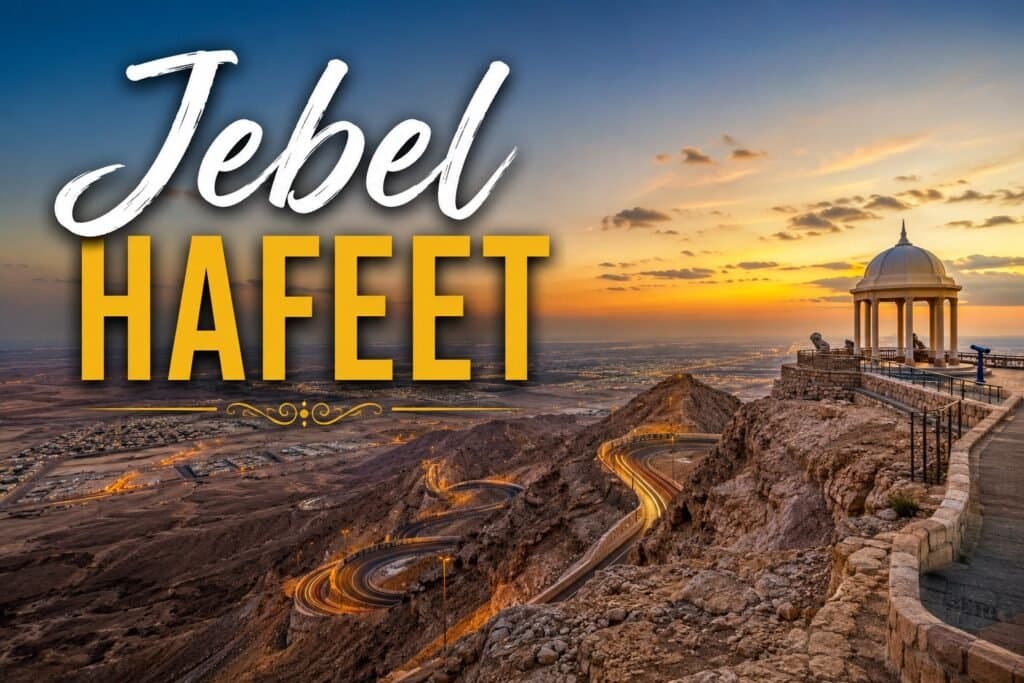
If you have spent time in the UAE and have not visited Jebel Hafeet yet, you are genuinely missing out. Rising to 1,249 metres on the Al Ain–Oman border, it’s Abu Dhabi’s highest peak and the second tallest mountain in the country. But height alone doesn’t explain the pull. People drive hours to get here — and they come back.
The reason is a rare combination of things: a prehistoric past, one of the world’s most celebrated driving roads, wildlife that surprises you, and views that genuinely stop you mid-sentence. Let’s get into it.
Jebel Hafeet and Its Place in UAE History

Here is something most people don’t know until they are actually standing at the base of this mountain — an entire prehistoric era in UAE history was named after it. The Hafit Period, spanning 3200 to 2600 BCE, takes its name from Jebel Hafeet because of Bronze Age beehive tombs discovered on its slopes.
At the foothills, you’ll find the Jebel Hafeet Beehive Tombs — over 500 single-chambered structures built from rough-cut stone, dating back more than 5,000 years. UNESCO recognised them in 2011 as part of the Cultural Sites of Al Ain, the UAE’s first ever World Heritage designation.
What makes them genuinely remarkable isn’t just their age. Artefacts found inside trace trade routes to ancient Mesopotamia (modern-day Iraq), Iran, and the Indus Valley — present-day Pakistan and India. There are also 8,000-year-old remnants from the Neolithic period scattered across the area.
Think about that for a second. The same mountain you are about to drive up for sunset photos has been part of human life for nearly ten millennia.
The Geology That Makes Jebel Hafeet Stand Apart

Jebel Hafeet doesn’t just look dramatic — there is a reason for it. The mountain’s unusual limestone and dolomite structure has been shaped over millions of years by volcanic eruptions, tectonic shifts, and erosion. That layered, craggy silhouette you see from Al Ain is not just scenic — it’s a geological record stretching back to when this entire region lay beneath an ancient sea.
Inside the mountain, it gets even more interesting. There is an extensive cave system with well-preserved stalagmites and stalactites, and fossils of corals, foraminifera, and bryozoa have been found in the rock layers. In other words, the mountain is quietly one of the most complex natural formations in the entire Gulf region — and most visitors drive straight past all of that to get to the viewpoint.
Jebel Hafeet Weather: Why It Feels Like a Different World Up Here?

This is the part that surprises people most, especially those visiting in summer. While the rest of the UAE swelters, Jebel Hafeet operates on entirely different terms. Daytime temperatures at the summit sit comfortably in the mid-20s°C, and at night they drop to between 10 and 13°C — sometimes lower. Pack a jacket. You’ll thank yourself.
October through April is the sweet spot. Mornings can carry a chill and occasional mist that adds something almost eerie to the landscape — in the best possible way. The cooler months make long drives, hikes, and summit picnics genuinely enjoyable rather than something to power through. Summer visits aren’t impossible, but early morning is your only real window before the heat takes over.
Here is a quick guide to help you plan:
| Season | Avg. Summit Temperature | Best For |
| October – April | 10°C – 25°C | Driving, hiking, picnics, photography |
| May – June | 25°C – 32°C | Early morning visits only |
| July – September | 30°C – 38°C | Best avoided; extreme heat |
| Year-round (evenings) | 10°C – 18°C | Stargazing, photography, cooler drives |
One of the World’s Greatest Driving Roads

Edmunds.com — one of the most respected automotive information sources globally — once described the road up Jebel Hafeet as being among the world’s greatest driving roads. That’s not a marketing copy. Anyone who’s driven it understands why.
The route winds 11.7 kilometres up the mountainside through more than 60 bends, with the desert dropping away behind you at every turn. Cyclists tackle it for the climb. Motorcyclists come for the corners. Car enthusiasts make the trip from Dubai and Abu Dhabi specifically to drive it — not for the destination, but for the road itself.
There are pullout points along the way where you can stop, get out, and just take in where you are. At the top, the views across Al Ain’s oasis city and into Oman on clear days are the kind that make you reach for your phone before you have even parked.
Is Jebel Hafeet Open Today? Everything You Need to Know

Good news — there are no gates, no tickets, and no entry fees for the mountain road itself. Jebel Hafeet is open 24 hours a day, seven days a week, year-round. The question people are really asking when they search “is Jebel Hafeet open today” is usually about specific facilities, so here’s the breakdown:
The Jebel Hafeet Desert Park at the base generally opens at 8:00am and closes around sunset — roughly 6:00pm — though this can shift slightly by season. The Mercure Grand hotel and its restaurants have their own operating hours, so check ahead if you are planning to eat or stay. The mountain road itself? Drive it whenever you like.
A few things worth knowing before you head up:
- Carry your own water and snacks — food options on the mountain are very limited
- The bends can be tricky in the dark, so go steady if you are driving at night
- Rare but possible: slick roads in winter after rainfall, so take it cautiously
- A standard car handles the road just fine — it’s fully paved and well-maintained
Mercure Grand Jebel Hafeet Al Ain Hotel: What It’s Like to Sleep on a Mountain?

For most people, Jebel Hafeet is a day trip. But if you want to experience it properly — waking up at sunrise with Al Ain’s oasis spread out below you and the air actually cold enough to need a blanket — the Mercure Grand Jebel Hafeet Al Ain Hotel is worth knowing about.
Sitting at 3,000 feet above sea level right on the mountain, it’s the only hotel of its kind in the region. The 124 rooms and suites all come with views, and the facilities are genuinely impressive for a mountain property: two gourmet restaurants, a café, a panoramic lounge bar overlooking the city below, a spa, mini-golf, and three swimming pools.
It’s particularly popular with families looking to escape the summer heat, honeymooners wanting something a little more unusual, and anyone who’s driven up at sunset and thought — I don’t want to leave yet.The hotel sits about a two-hour drive from both Dubai and Abu Dhabi, which makes it a very doable overnight escape rather than a rushed day trip.
Wildlife You Didn’t Expect

Most people come to Jebel Hafeet for the views and the drive. What they don’t expect is the wildlife. The mountain and its surrounding desert park are home to 119 species of birds, 200 species of insects, and 23 varieties of butterfly. That alone would be noteworthy.
But there are also bats, foxes — including the elusive Blanford’s fox — the Arabian caracal, various snake species, and a lizard species unique to the region. At the base, Jebel Hafeet Desert Park stretches across nine kilometres and offers guided hikes to the Bronze Age tombs, cycling routes, off-road experiences, camping, and Bedouin-style glamping for those who want to stay the night surrounded by the landscape.
You can also explore experiences at TickYourList, where you will find curated tours, activities, and skip-the-line tickets to make the most of your trip.
To Sum Up
Jebel Hafeet is famous in the UAE because it earns it — quietly, without the gloss of a marketing campaign. It’s a place where 5,000-year-old tombs sit at the foot of one of the world’s great driving roads, where the air is genuinely cool when everything around it is scorching, and where a mountain hotel lets you fall asleep above the desert with nothing but silence and stars.
Whether you are a history person, a driver, a nature lover, or just someone who wants to see a side of the UAE that exists beyond the skyscrapers — make the trip. It’s worth every kilometre.
FAQs
What is Jebel Hafeet famous for in the UAE?
Jebel Hafeet is famous for its scenic mountain road, breathtaking summit views, Bronze Age beehive tombs, UNESCO World Heritage significance, unique geology, cooler climate, and diverse wildlife, making it one of the UAE’s top natural attractions.
Is Jebel Hafeet a UNESCO World Heritage Site?
Jebel Hafeet itself is part of the UNESCO-listed Cultural Sites of Al Ain. Its ancient Bronze Age beehive tombs, dating back over 5,000 years, highlight the mountain’s importance in the UAE’s archaeological and cultural history.
Is Jebel Hafeet open every day?
Yes, Jebel Hafeet is open 24 hours a day, seven days a week, and there is no entry fee for the mountain road. Some attractions, such as Jebel Hafeet Desert Park, operate during specific daytime hours.
Why is the Jebel Hafeet road so popular?
The 11.7-kilometre road to Jebel Hafeet features more than 60 sweeping bends, smooth pavement, and spectacular desert views. It is considered one of the world’s best driving roads and attracts motorists, cyclists, and photographers year-round.
When is the best time to visit Jebel Hafeet?
The best time to visit Jebel Hafeet is between October and April when temperatures are cooler and ideal for driving, hiking, sightseeing, and photography. Sunrise and sunset offer the most spectacular mountain and desert views.
Can you stay overnight at Jebel Hafeet?
Yes, visitors can stay at the Mercure Grand Jebel Hafeet Al Ain Hotel, which offers mountain-view rooms, restaurants, swimming pools, and spa facilities. Camping and glamping are also available at Jebel Hafeet Desert Park.
What can you do at Jebel Hafeet besides driving?
Besides enjoying the scenic drive, visitors can explore ancient beehive tombs, hike desert trails, visit Green Mubazzarah, watch wildlife, camp or glamp, photograph panoramic landscapes, and experience the cooler mountain climate throughout the year.