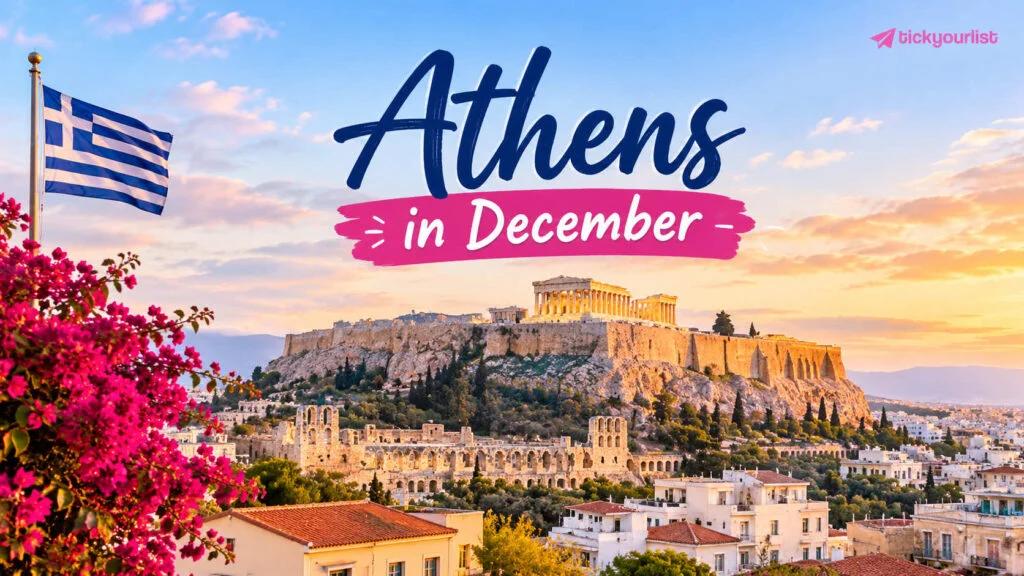
When most people picture Athens, they think of the hot sun, white marble and an enormous queue to get into the Acropolis. December is a different city — cooler, calmer, and on some days frankly damp.
Which makes it a lot easier to love, as long as you’re fine with a raincoat and the sun disappearing just after 5pm. If that sounds workable, read on.
We’ve put together what the weather actually does, what’s open and until when, where the Christmas lights are, and a three-day plan you’re welcome to steal. There are plenty of things to do in Athens once you know what to book and what to leave loose.
The Short Answer
Mostly yes. If you’d rather eat, walk and look at ancient stones than lie on a beach, December is a good time to go. You give up the weather and the long evenings. You get space to breathe at the big sites and a city that feels like it belongs to the people who live there.
| Detail | What to expect |
| Daytime high | About 14°C (57°F) |
| Night low | About 7°C (45°F) |
| Rain | Around 10 to 11 days |
| Daylight | Roughly 10 hours |
| Acropolis | 8:00 to 17:00, last entry 16:30 |
| Closed | 25 and 26 December, 1 January |
| Sea | About 17°C — so, brr |
Beach people should wait for May or September. Everyone else, read on.
December Weather: What to Expect
Long-run readings from the Hellinikon station put December averages at a maximum of about 14°C and a minimum of around 7°C. On a good day it feels like early spring. On a bad one the wind comes off the hills and you’ll wonder why you left your scarf at the hotel.
Expect rain on roughly 10 or 11 days, though rarely a full day of it — more often heavy showers with bright gaps between. Sunshine averages around four hours, so the days feel short. The sea sits near 17°C, which is swimmable in theory and ignored in practice.
Temperatures swing more than the averages suggest. Athens gets December days close to freezing and others nudging 20°C, so check the forecast for your actual dates. Snow in the centre is rare, though the surrounding hills do turn white occasionally.
What to pack
Layers, mostly. A light waterproof over a warm mid-layer handles most of it.
Shoes matter more than you’d think. The walkways on the Acropolis have been polished by centuries of feet and get genuinely slippery when wet. A heavy coat isn’t necessary unless you feel the cold. A small umbrella is useful in town but won’t survive the wind on the rock, so a decent hood is the better bet.
What You Gain and What You Give Up
The gains are real. Crowds thin out at the Acropolis, the Ancient Agora and the Olympieion, so you can actually read the information boards and get a photo without strangers in it. Walking the city at 14°C beats doing it in July.
On certain Sundays between 1 November and 31 March, state-run sites and museums are free. Sources disagree on whether that’s the first Sunday only or the first and third, so check the Ministry of Culture list for your dates. Hotel prices are generally lower outside peak summer, Christmas and New Year excepted.
Now the catches. Entry is no longer cheaper in winter. The half-price winter rate has been scrapped and adults pay €30 year-round, so your savings come from flights and accommodation rather than tickets.
Opening hours are shorter — the Acropolis closes at 17:00 and several smaller sites shut earlier. Rain disrupts things. Ferries run less often. And there’s been restoration scaffolding on the northern side of the Parthenon, so check current conservation notices if a perfect photograph matters to you.
None of that would stop us going, but it’s an honest difference from July.
Things to Do in Athens in December
Start with the obvious, because the obvious is obvious for a reason.
The Acropolis and Parthenon
A beautiful time of year for it. Entry works on timed tickets, with each slot covering roughly 15 minutes either side of your allocated time, so book ahead. Winter hours run 8:00 to 17:00 from November to March, last entry 16:30. Take the earliest slot you can get.
Early morning gives you gentle light on the marble and no tour groups. You’ll be back down for coffee before most visitors have surfaced. Closed on 25 and 26 December and 1 January.
If you want context while you walk, Acropolis and Parthenon tickets with optional audio guide let you take your time and listen only when something catches your eye. Considerably better than standing in the cold behind someone’s umbrella.
Temple of Olympian Zeus
The Olympieion was the largest temple ever built in ancient Greece, and it’s a short walk from the Acropolis. Fifteen columns remain, each around 17 metres high, right beside Hadrian’s Arch.
Winter hours are shorter than the Acropolis — roughly 8:00 to 15:00 — so visit in the morning or go straight there after coming down from the rock. Check the posted last-entry time, which is earlier again.
There’s no museum here, just open ground, which is exactly when commentary earns its place. The Temple of Olympian Zeus tickets with audio guide cover that.
One thing to know: the combined multi-site ticket that used to cover the Olympieion alongside other Athens sites was discontinued in 2025, so each site now needs its own admission. Check the official site before assuming a bundle exists.
When it rains
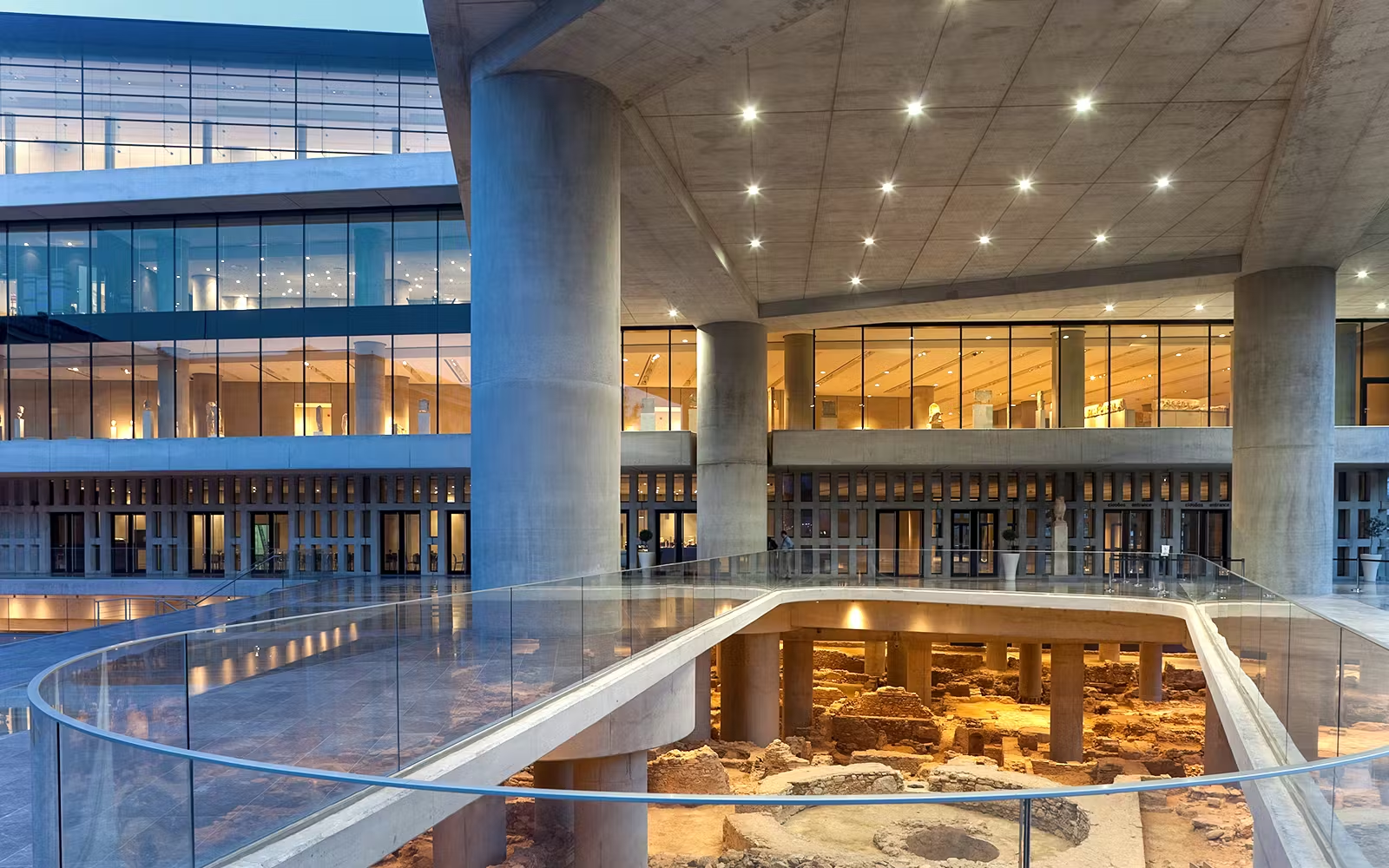
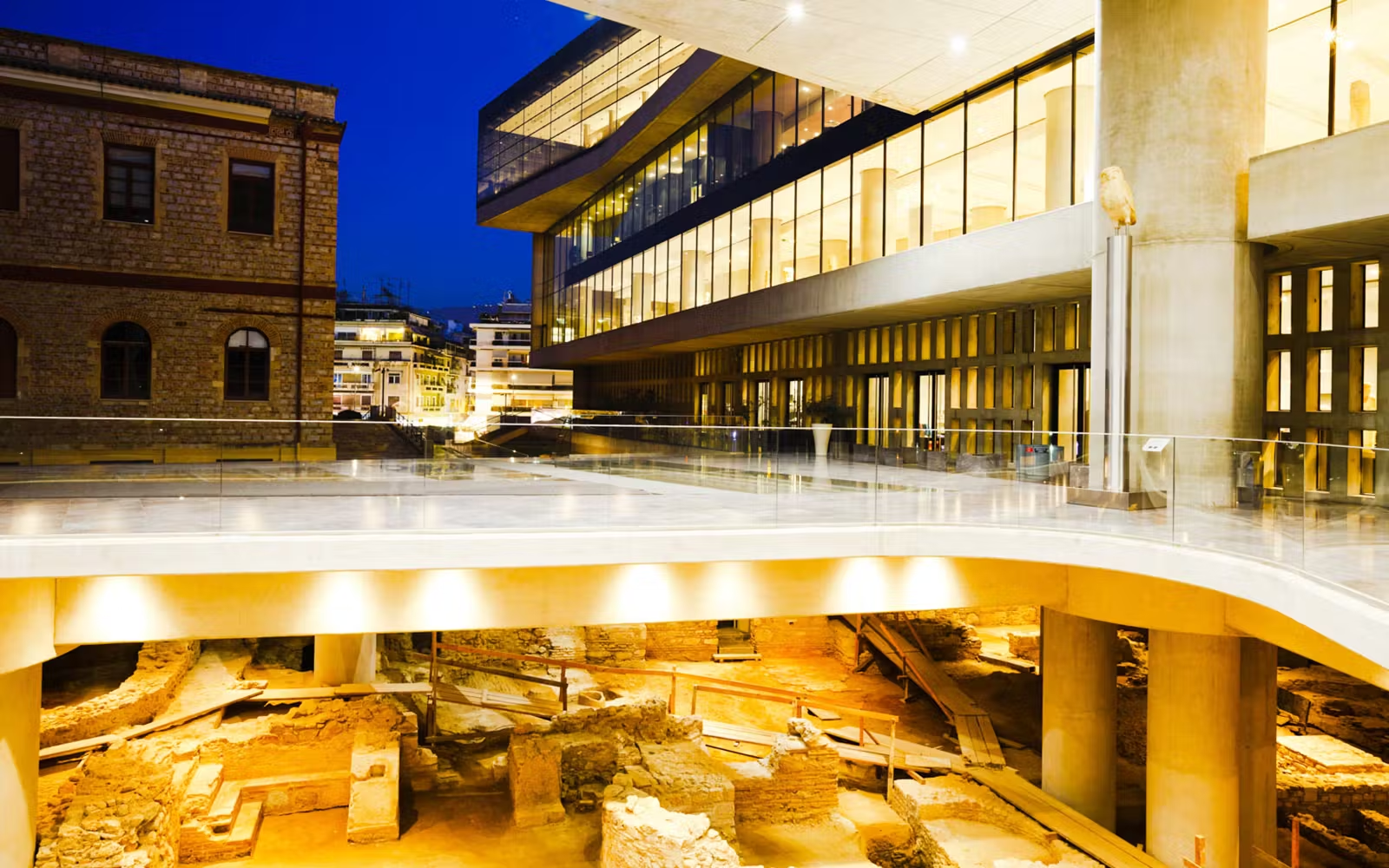
The Acropolis Museum at the foot of the hill is the obvious fallback. Parts of the floor are glass, so you look down into an excavated ancient neighbourhood, and the top gallery aligns with the Parthenon itself.
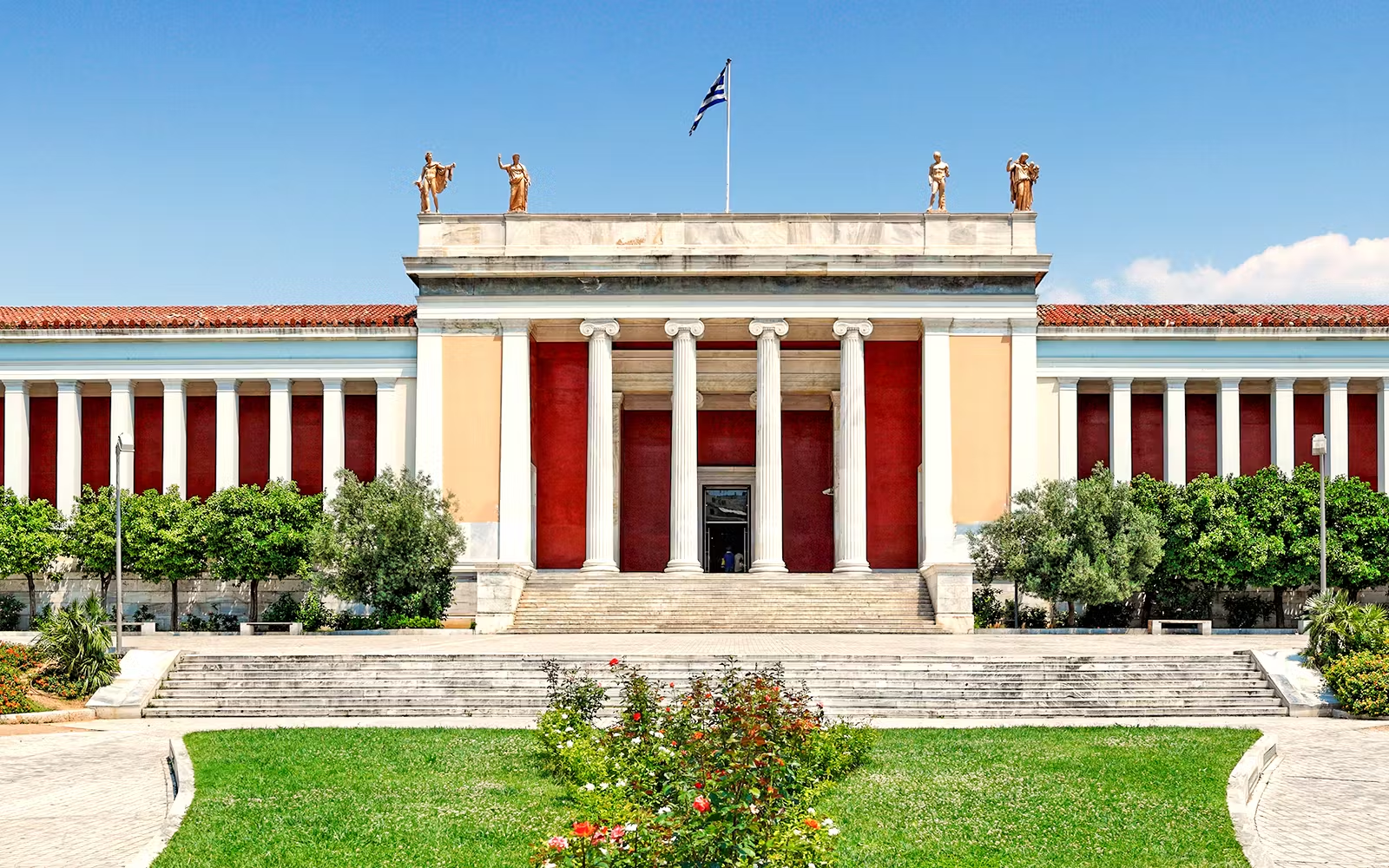
The National Archaeological Museum is the other strong option. Both need their own tickets — neither is covered by Acropolis admission.
Just wandering
Cooler weather suits this better than summer does. You can walk up through the whitewashed lanes of Anafiotika without breaking a sweat, browse the flea market, and stop for hot chocolate or a strong Greek coffee.
Take the funicular up Lycabettus Hill about an hour before sunset and watch the city lights come on below you, with the Acropolis glowing across the way.
And eat
Athenian food is at its best in December. Hot loukoumades, grilled meats, soups and spiced sweets. A guided walk around the Central Market and the lanes nearby makes one of the better rainy-day plans — more on that below.
Christmas Markets and Festive Events
German Christmas markets have a very particular feel: wooden chalets, mulled wine, a cathedral looming over everything. Athens is more casual. Markets pop up in squares and parks across the city, and most are free to wander.
A note on dates: the details below are based on previous years and may shift for 2026. Check local listings before planning around any of them.
The main event is the tree in Syntagma Square, lit in the last days of November. Last year stood 19 metres with around 168,000 lights, switched on alongside a parade, an orchestra and a children’s choir. Ermou, Panepistimiou and Stadiou are strung with LED garlands, and Mitropoleos Square usually has a traditional nativity scene.
Omonoia Square typically hosts a seasonal market from late November to around 6 January, open late mornings through evenings and closed on Christmas Day.
The Christmas Village in Pedion tou Areos Park is free to enter, with a stage, light displays and festive food. In 2025 it ran from late November to 7 January with extended weekend hours.
Look out for karavakia — the small decorated boats Greeks traditionally light instead of trees. You’ll spot them around the city.
A cheap and genuinely lovely evening: see the Syntagma tree at dusk, walk down Ermou toward Monastiraki, and finish with something hot and sweet in a Plaka café.
Christmas Day and Boxing Day are quieter. State sites close on the 25th and 26th, and many shops and restaurants cut their hours. A good time for a long lunch and anything you’ve pre-booked.
A 3-Day Winter Itinerary
This works around the short days: ruins early, everything else after. If the forecast looks grim, swap days freely.
Day 1: Ancient Athens
Be at the Acropolis for 8:00 and give it about 90 minutes. Then the Acropolis Museum for the sculpture, coffee and lunch in the lanes below. Head to the Temple of Olympian Zeus around 14:00, since it closes at 15:00 with the last entry earlier. Dinner in Plaka — and if you can get a rooftop table or a quiet street with a view, the illuminated Acropolis is the reward.
Day 2: The islands
A full-day cruise to Hydra, Poros and Aegina gives you free time on each island and lunch on board. You dodge the summer crowds, but winter seas are choppier and itineraries sometimes change with the weather. Take a flexible ticket and check conditions the day before. If it looks bad, swap with Day 3.
Day 3: Food, markets, lights
Morning: a street food tour around Monastiraki and the Central Market. Afternoon: the Omonoia market or Christmas Village if they’re running, or the National Archaeological Museum if it’s pouring. Then the funicular up Lycabettus for sunset.
Finish with a walk through Syntagma and Ermou for the lights, and dinner in a taverna.
If you’re visiting in the last week of December, do the Acropolis on the 23rd, 24th or 27th. State sites are closed on the 25th and 26th.
Island Cruise or Street Food Tour?
These are the two experiences people most often ask about, and they suit different moods.
The island cruise is a long day — ten to twelve hours — departing from a marina near Piraeus. Several operators run it through the year, some with a dedicated winter vessel. There’s no swimming, obviously, but Hydra’s car-free harbour, Poros’s pine-covered hills and Aegina’s pistachio shops and ancient temple are all better without summer crowds.
Dress properly. Wind across open water is serious, and a morning that feels fine in Athens can be bitter at sea — bring a waterproof hat and gloves. Operators can change the itinerary in bad weather.
The street food tour is the relaxed option: bakeries, souvlaki counters, cheese shops and sweet shops with a local guide. Rain barely registers when you’re ducking into a warm doorway every ten minutes, and you’ll learn how Athenians actually eat.
Our suggestion: cruise on the brightest day, food tour on the greyest. Check each product page for duration, meeting point and inclusions.
Practical Tips
Book the earliest Acropolis slot you can, especially over Christmas when they go quickly. Ruins in the morning, museums and markets in the afternoon — the sun sets around 5pm and several sites close at 15:00 or 17:00.
Free days are good for your wallet, hard on your patience. Longer queues, no guaranteed entry time. Go the moment it opens or pick another day.
Expect closures. Many state sites shut on 25 and 26 December and 1 January, and plenty of places run reduced hours around then.
Stay central. Plaka, Monastiraki or the streets around Syntagma put the Acropolis, the metro and the lights on your doorstep, which matters when the days are short. The metro is fast and simple, and Akropoli station is minutes from the hill.
Two small things. Strikes occasionally affect public transport and ferries, so glance at local news a few days ahead if you’ve a tight connection or a cruise booked. And keep an eye on your bag in Monastiraki and on crowded metro carriages, as in any large European capital.
Book what you’d hate to miss — Acropolis, Olympieion, cruise, food tour — and stay flexible on everything else.
So, Is Athens Worth Visiting in December?
Yes. Quieter, cooler, more itself. The ruins are identical to July’s, the festive atmosphere is a bonus, and the rain is manageable if you start early.
It’s perfect if you like walking, eating and exploring a busy city, and want Christmas lights without flying somewhere snowbound. It’s wrong for you if you want beach days, long outdoor lunches and guaranteed sun.
If you’re a yes, book the things that need booking: Acropolis and Parthenon tickets, Temple of Olympian Zeus tickets, the Hydra–Poros–Aegina cruise and the Athens street food tour. Everything else can stay loose.
FAQs
Is Athens worth visiting in December?
Yes, if you want culture and food over the sun. Expect mild temperatures, thinner crowds at the ancient sites and Christmas lights in the centre. Pack waterproof and start your days early.
What is the weather like in Athens in December?
Typically around 14°C by day and 7°C at night, with 10 to 11 rainy days and about four hours of sun daily. Layers and a waterproof cover in most situations.
Does it snow in Athens in December?
Almost never in the city centre, though the surrounding hills get dusting during cold snaps. Most December days are mild and damp, with the occasional chilly, windy spell.
Is the Acropolis open in December?
Yes, daily from 8:00 to 17:00 with the last entry at 16:30, except 25 and 26 December and 1 January. Timed-entry tickets are required, so reserve a slot before you go.
How much is the Acropolis in winter?
€30 for adults, the same as the rest of the year. The old half-price winter rate has been discontinued, so any savings from a December trip come from flights and hotels rather than admission.
Are there Christmas markets in Athens?
A few, though not on the German scale. The Syntagma Square tree, the Omonoia Square market and the Pedion tou Areos Christmas Village typically run from late November into early January. Check local listings for 2026 dates.
Is Athens cheaper in winter?
Flights and hotels often cost less outside summer and the holiday weeks, but the Acropolis ticket is €30 all year. Savings come from travel and lodging, not entry fees.
Can you do an island cruise from Athens in December?
Yes, several operators sail to Hydra, Poros and Aegina year-round. Winter seas are rougher, so dress warmly and choose a flexible ticket in case the itinerary changes.
How many days do you need in Athens in winter?
Three is comfortable: the Acropolis, a museum or two, a food tour or island day, and an evening among the lights. Add a fourth as a rain buffer.