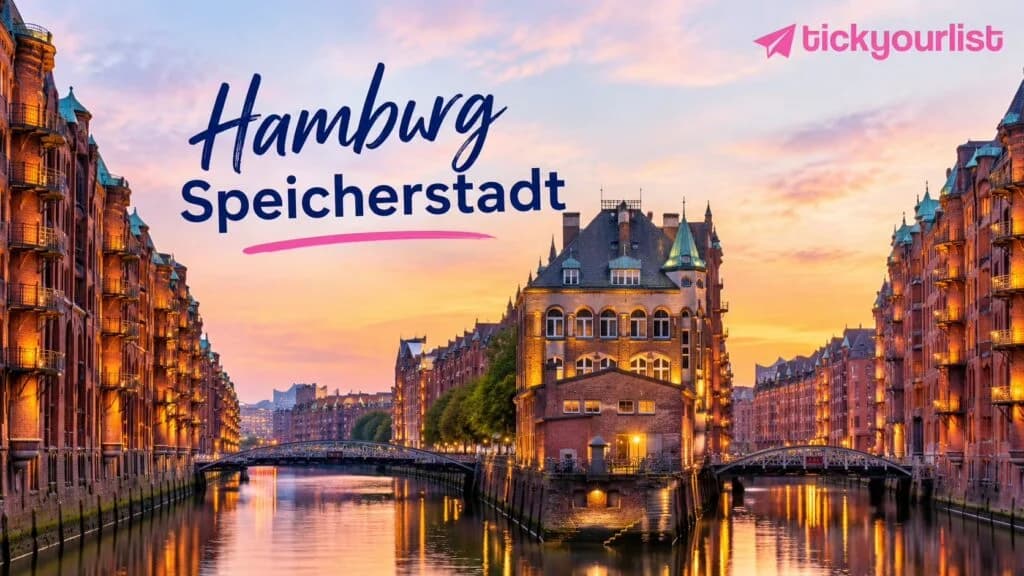
Hamburg Speicherstadt looks like an entirely different place once the sun drops behind its gabled rooftops. Old red-brick warehouses once kept watch over coffee, tea, and Persian carpets for years...
Hamburg Speicherstadt looks like an entirely different place once the sun drops behind its gabled rooftops. Old red-brick warehouses once kept watch over coffee, tea, and Persian carpets for years on end.
Now they catch the last light and seem to keep it for longer than you think. The canal water shifts from copper to dark as night settles in. Across the way, the Elbphilharmonie’s glass top glows suddenly, like it has just been switched on.
If you’ve only walked through at midday, you’ve seen half the story.
Quick Facts
What
Detail
UNESCO status
Speicherstadt and Kontorhaus District, listed July 2015
Size
~26 hectares, 17 warehouse complexes
Built
1883–1927, western section rebuilt after WWII
Plaza hours
10:00–24:00 daily, last admission 23:30
Plaza entry
Free until 4 October 2026, then €5
Advance booking fee
€3, rising to €5 on 5 October 2026
The Tube
82 m curved escalator, ~2.5-minute ride
Plaza height
37 metres
Walk between the two
15–20 minutes
The Plaza Price Change You Need to Know
This is the most time-sensitive thing on the page.
Elbphilharmonie Plaza access has been free. From 5 October 2026 it costs €5. The advance booking fee rises from €3 to €5 at the same time, and remaining same-day walk-in tickets, currently issued free, will also become €5.
If you’re travelling before that date, walk-in tickets are still free subject to availability. After it, budget €5 per person either way.
Concert ticketholders for the Grand and Recital Halls get Plaza access two hours before their event without a separate ticket.
The Plaza is also step-free. Lifts sit to the right of the Tube, so you don’t have to take the escalator if you’d rather not.
Why Speicherstadt Glows After Dark
Speicherstadt is said to be the biggest warehouse site that stays connected. It was not made for tourists. The goal was trade, not sightseeing. In the 1880s, Hamburg entered the German customs union. After that, the city needed a duty-free place to store goods along the Elbe.
Houses were removed across the area. More than a thousand homes were taken down. About 20,000 people had to move away. What went up between 1883 and 1927 was a nearly unbroken run of neo-Gothic brick warehouses laced together by narrow canals called fleets.
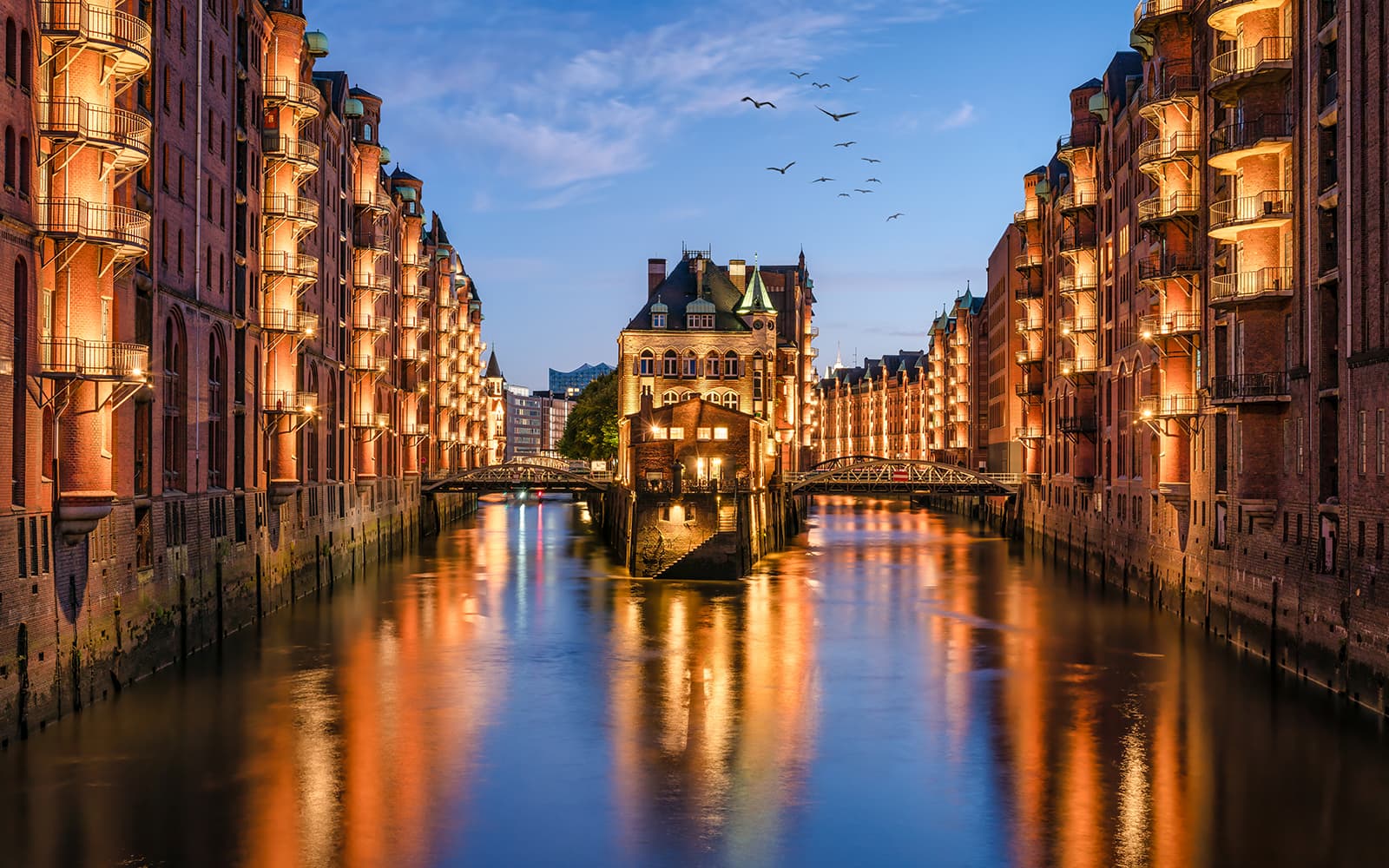
That’s what matters at dusk. Brick holds warm colour in a way concrete never does, and the fleets double every light source — a single row of bridge lamps becomes two, one real and one rippling.
During the Second World War, Allied bombings wrecked the west part of the area. After that, it was rebuilt. The same character of the place still held up, and UNESCO placed the Speicherstadt and the nearby Kontorhaus District on the World Heritage list in July 2015.
Golden Hour, Season by Season
Hamburg sits far enough north that daylight swings dramatically across the year, so “shoot at sunset” isn’t much use on its own.
Season
Months
Golden hour
Notes
Late spring
May–June
20:15–21:00
Longest daylight; book a later slot
Summer
July–August
20:00–20:45
Elbphilharmonie lights properly after 21:30
Autumn
September–October
18:30–19:15
Crisp air, thinner crowds, strong reflections
Winter
November–January
15:15–16:00
Really an afternoon plan, not an evening one
The one rule worth remembering: reach Poggenmühlenbrücke or the Wasserschloss in the last thirty minutes before sunset and stay fifteen after. That overlap between daylight and the district’s own lamps is the difference between a flat photograph and one with depth.
This is walking advice. If you’re taking a cruise instead, check the departure time against the table above — boats run to a schedule, and the light doesn’t wait.
What You’ll Pass on Foot
Speicherstadt isn’t just facades. Inside the warehouses are working businesses: the old Coffee Exchange, oriental carpet dealers trading here for generations, the Hamburg Dungeon, and Miniatur Wunderland, the world’s largest model railway.
You don’t need to go inside any of them, but knowing they’re there changes how you read the buildings. That’s not just a warehouse gable — it’s a carpet showroom that predates the First World War.
Further toward HafenCity, Westfield Überseequartier marks where old Hamburg gives way to new.
TheElbphilharmonie
The Plaza sits 37 metres up, wedged between the old brick warehouse base and the glass structure above. You reach it via the Tube, an 82-metre curved escalator taking about two and a half minutes, or by the lifts beside it.
The glass sail above looks like one solid piece. It’s actually around 1,100 individually shaped and numbered glass elements.
From the Plaza you get the inner-city skyline and Alster lakes to the north, Speicherstadt and HafenCity to the east, the working container port to the south, and the harbour waterfront west.
Two Evening Options Compared
Evening lights cruise
Harbour cruise + Elbphilharmonie tour
Format
1.5-hour illuminated harbour cruise
1-hour harbour cruise plus guided Elbphilharmonie walkthrough
Focus
Speicherstadt and harbour from the water at night
Architecture and the building’s story, plus harbour views
Language
Check current listing
German-language guided tour
Best for
Photographers and first-timers after atmosphere
Anyone wanting the Elphi story told properly
Note
Fixed departure — check it against golden hour
Includes Plaza access via the guided route
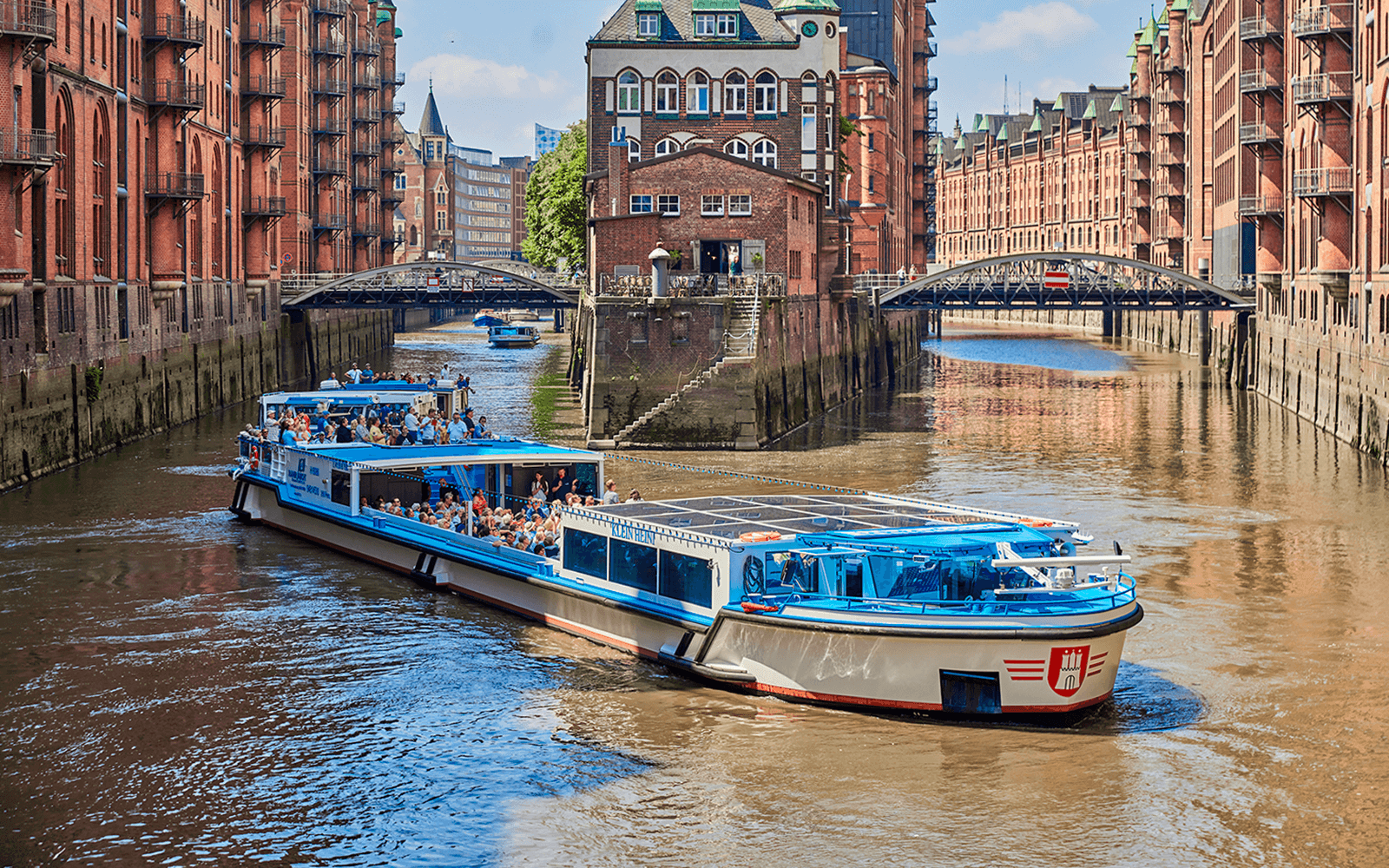
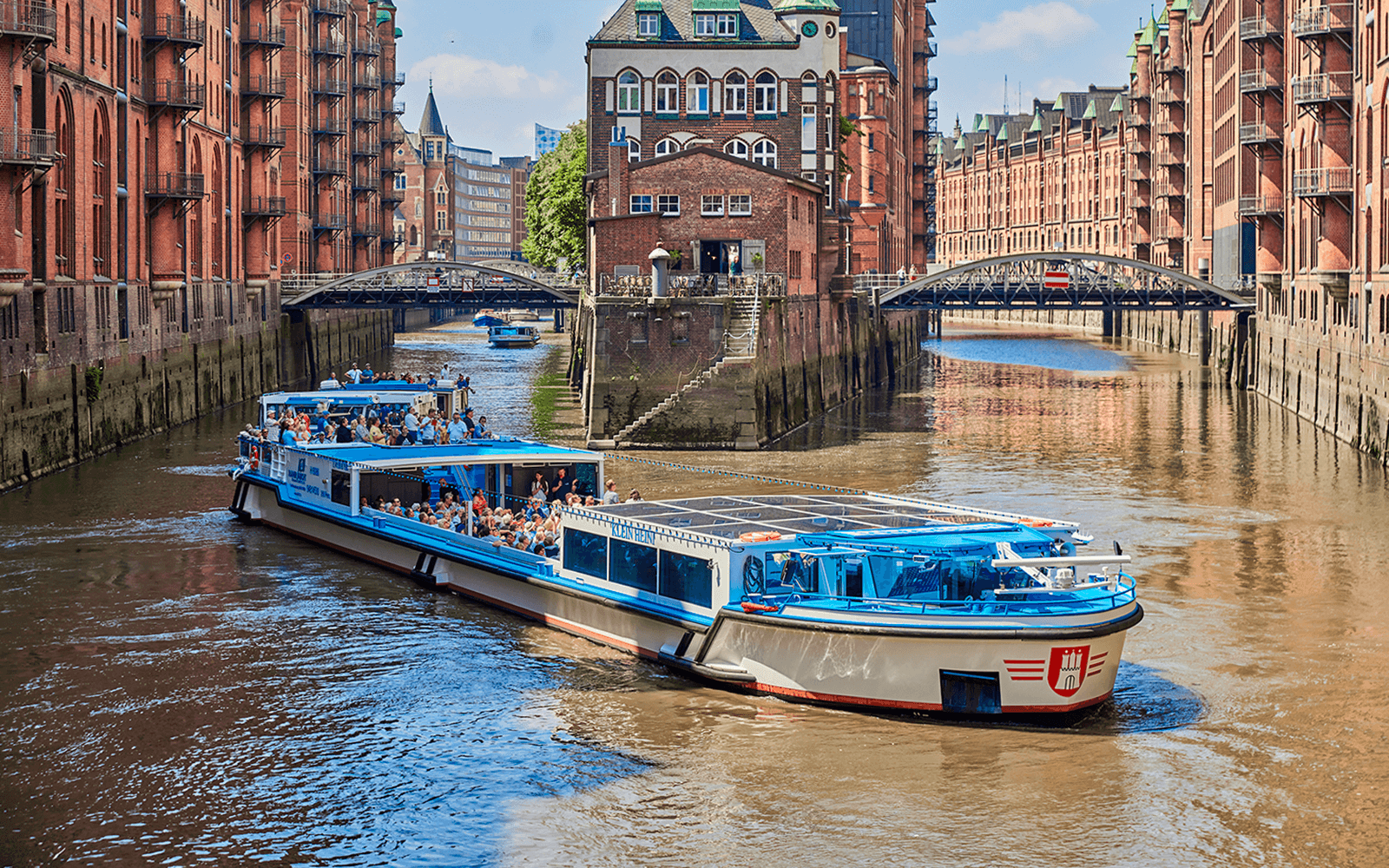
The Grand Evening Lights Cruise gives you the district from the water, which is the angle you can’t get on foot — warehouse facades rising straight out of the canals with the harbour opening up behind.
The harbour cruise with Elbphilharmonie guided tour is the one for context: why HafenCity was built on reclaimed port land, why the Elbphilharmonie’s budget became a local legend, and what you’re actually looking at from the Plaza. Note it’s guided in German.
Neither replaces the walk. The golden-hour route through the fleets is free and it’s the best photography in the district. The cruises add the water-level view and the building’s story. Ideally, do both — walk at dusk, cruise after dark.
Getting There
U-Bahn to Baumwall or Messberg, then five to ten minutes into the warehouse district. The Wandrahmsteg bridge near Messberg is a common meeting point for guided walks.
From there the Elbphilharmonie is another fifteen minutes along the water, or the U4 to Überseequartier. Ferry line 72 from Landungsbrücken also stops at the Elbphilharmonie landing stage — worth knowing, since an HVV ferry ticket is far cheaper than a harbour cruise if you only want the water view.
Parking is very limited in HafenCity and costs around €22 for four hours in the Elbphilharmonie car park.
Practical Tips
Dress for the water. Canal paths and cruise decks get breezy after sunset, even in July.
Book ahead in summer. June through August evenings fill fast, especially anything with a cruise, since boat capacity is limited.
Check Plaza access separately. It keeps its own hours apart from concert schedules, and the €5 charge starts 5 October 2026.
Skip the tripod. Several bridges and towpaths are narrow enough that a phone with night mode serves you better than heavy gear.
Booking
Walk the fleets at dusk for free, then decide whether you want the water-level view or the architecture story — or both. The wider list of things to do in Hamburg covers the harbour, the Reeperbahn and the rest of the city.
FAQs
What is the best time to visit Speicherstadt and Elbphilharmonie in the evening?
Arrive at Speicherstadt thirty minutes before sunset and stay fifteen after, when lamps come on against warm brick. Then walk to the Elbphilharmonie — its facade lights properly after dark, around 21:30 in summer and much earlier in winter.
Can I visit the Elbphilharmonie without attending a concert?
Yes. The Plaza viewing platform at 37 metres is open to anyone daily from 10:00 to midnight, last admission 23:30. You need a Plaza ticket, but not a concert ticket. Concertgoers get access two hours before their event.
Do I need to book tickets to visit the Elbphilharmonie in the evening?
Not strictly, but it helps. Same-day walk-in tickets are issued subject to availability, which runs out on busy evenings. Pre-booking a timed slot costs €3, rising to €5 from 5 October 2026, and guarantees entry.
How long does it take to explore Speicherstadt and Elbphilharmonie?
Allow two to three hours for both. Speicherstadt’s main bridges and fleets take about an hour on foot, the walk to the Elbphilharmonie another fifteen to twenty minutes, and the Plaza thirty to forty-five minutes.
Is Speicherstadt safe to visit at night?
Generally yes. It’s a well-lit heritage and business district rather than a nightlife area, so it’s quiet rather than rowdy after dark. Watch your footing on canal-side paths and bridges, which are narrow and can be damp.
How much does visiting Hamburg Speicherstadt cost?
Walking the district is free — the bridges, fleets and warehouse facades cost nothing at any hour. You only pay for what’s inside: Miniatur Wunderland, the Hamburg Dungeon, museums, and guided walks or cruises on the harbour.
Is Hamburg Speicherstadt expensive?
The district itself costs nothing, which makes it one of Hamburg’s better-value evenings. Costs come from add-ons — Plaza entry becomes €5 in October 2026, and harbour cruises and guided tours are priced separately on top.
Is the Elbphilharmonie Plaza wheelchair accessible?
Yes. Lifts run to the right of the Tube escalator, so you don’t need to use it. Baumwall U-Bahn, the Am Kaiserkai bus stop and the Elbphilharmonie ferry landing are all accessible too, so the whole route works step-free.
Where is the best photo spot in Speicherstadt?
Poggenmühlenbrücke, looking toward the Wasserschloss. It’s the classic frame — turreted brick building, two fleets meeting, reflections doubling every light. Go at blue hour and expect company; it’s the most photographed view in the district by some margin.
How do I get from Speicherstadt to the Elbphilharmonie?
Walk — it’s fifteen to twenty minutes along the water and the route is the point. Alternatively take the U4 to Überseequartier, or ferry line 72 from Landungsbrücken, which stops at the Elbphilharmonie landing stage directly.