Underground Venice: Hidden Tunnels, Crypts and Secret Passages
Underground Venice is commonly referred to as a city that goes against nature, a box of limestone resting on a forest of submerged wooden poles. Although large numbers of visitors...
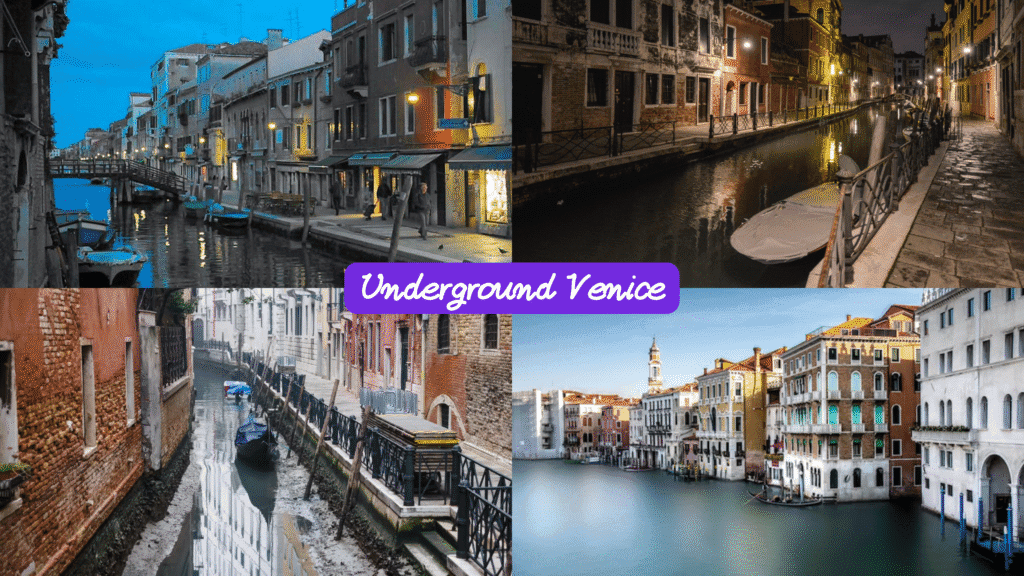
Underground Venice is commonly referred to as a city that goes against nature, a box of limestone resting on a forest of submerged wooden poles. Although large numbers of visitors venture to the lighted Rialto Bridge or the crowded St. Mark’s Square, a silent, shadowy world is there just under their soles. This is the case of Underground Venice, a maze of water-damaged tombs, moist prison cells, and lost ways that narrate a far gloomier tale than the sparkling royalty above.
Digging into the ground of Venice is a one-of-a-kind ordeal. In contrast to the case of Rome or Naples with their good solid volcanic rock suitable for creating large catacombs, the situation in Venice is different, as it has to do with a swampy area. That means that whatever is beneath the surface of this city is in a continual struggle with the lagoon’s tides. Still, for the ones who dare to see deeper, the city discloses a hidden history of interest, of sacrifices made, and of the genius of architects.
The Flooded Crypts of San Zaccaria
Underneath the Church of San Zaccaria lies one of the most hauntingly beautiful instances of Underground Venice. The upper church is a pinnacle of Renaissance art, while the 9th-century crypt below delivers a dreamlike experience. Due to the crypt’s floor being beneath the average sea level, it is constantly covered with a very thin layer of lagoon water.
The water serves as a mirror, throwing back the ancient Romanesque columns and vaulted ceilings. Eight early Venetian Doges’ remains are here, lying in a sea of silence that feeling completely disconnected from the present-day world. When the venice weather underground indicators point to a high tide, the water in this crypt can rise so much that the burial chamber becomes a figurative one of submerged. It is a sad but beautiful reminder of the city’s never-ending battle with water.
The Secret Passages of the Doge’s Palace
The Doge’s Palace is renowned for its magnificent ballrooms and opulent staircases, but a network of secret doors and narrow passages lies behind the heavy tapestries and lavish woodwork. These were the paths of the “Council of Ten,” the powerful secret police of the city, who could thus pass through the palace without being seen.
The opulent judicial chambers give way to the “Pozzi,” which are the wells below. These were the prison cells located at water level that were dark and damp. Those prisoners who were kept here lived in almost complete darkness, and during high tide, they even had water lapping at their feet. The shift from the splendid power halls to the freezing stone of the underground cells signifies the heartless and efficient nature of the Venetian Republic. If you are thinking about going, it is very important to check the weather reports for underground venice since the heavy rains and high tides may sometimes prevent access to the darkest parts of these ancient dungeons.
The Mystery of San Simeon Piccolo
The church of San Simeon Piccolo, famous for its gigantic green dome, is situated just opposite Santa Lucia railway station. However, the entrance to its spacious circular crypt is what most tourists don’t see. This may be the nearest attraction to a “catacomb” that Venice can offer, if at all.
The crypt consists of a network of chambers adorned with 18th-century frescoes illustrating the Way of the Cross and death scenes. It was used as a burial ground for both the faithful of the parish and the members of the religious brotherhoods. It is necessary to have a candle or a flashlight to walk through these dark passages as there is no light from outside. The atmosphere is heavy with the aroma of wet rock and the past which is definitely very real and also very ghostly “buried” glimpse of the city.
Engineering an Underground City
In order to grasp the reason behind Underground Venice being so unique, it is necessary to examine the ground on which the city stands. The city of Venice is constructed upon thousands and thousands of wooden poles which have been hammered into the mud until they hit a hard layer of clay known as caranto. The wood of these poles buried under an oxygen-free environment and being salt water mineralized, has after hundreds of years become like stone.
The presence of a waterlogged foundation is the reason why real “tunnels” are seldom found. The majority of the secret paths in Venice are of the kind that go between walls—the thickness of the walls hides the spaces—or they are formerly raised walkways that have now been buried. The city does not dig deep; it simply hides in the shadows of its own buildings.
Navigating the Elements
Prior to setting out on a trip to discover these secret places, it is essential to have a clear picture of the local surroundings. The weather underground venice fans usually monitor the “Acqua Alta” (High Water) occurrences that take place mainly from October to January.
Underground spaces are the first to be affected when the tide rises. A sunny day on the surface does not always mean the crypts are dry. The conditions of venice weather underground are a combination of the factors such as atmospheric pressure, lunar cycles, and wind speeds that push the Adriatic Sea into the lagoon. By checking these forecasts, it is guaranteed that your exploration of the city’s hidden depths will not end with wet shoes or closed exhibitions.
Conclusion
Venice is a city with two sides. Its bright and touristic aspect consists of the canals and gondolas; the other is the dark and silent world of Underground Venice that quietly stays below the surface. The hidden places, ranging from the water-mirrored crypts of ancient saints to the narrow alleys where spies once conversed, are all part of the city’s character. If you will be watching the venice weather underground and the unique tides of the city, you will have access to a part of the Floating City that only a few people are able to see.
FAQ
Are there actual catacombs in Venice like those in Rome?
No, Venice does not have a vast network of catacombs because the ground is too marshy. Instead, the city has church crypts and basement-level prisons that serve as its “underground” layer.
Can I visit the secret passages of the Doge’s Palace alone?
Access to the secret passages, including the torture chambers and Casanova’s prison cell, is only available through a specific guided tour called the “Secret Itineraries” tour. It must be booked in advance.
Is it safe to visit the flooded crypts during Acqua Alta?
During significant flooding, these areas are usually closed to the public for safety. Always check the local tide forecast and the weather underground venice updates before heading to lower-level sites.
Do I need special equipment to see Underground Venice?
ost sites are accessible with standard walking shoes, though the crypt at San Simeon Piccolo is very dark and may require a flashlight. For the flooded crypt at San Zaccaria, there are raised walkways for visitors to use.