

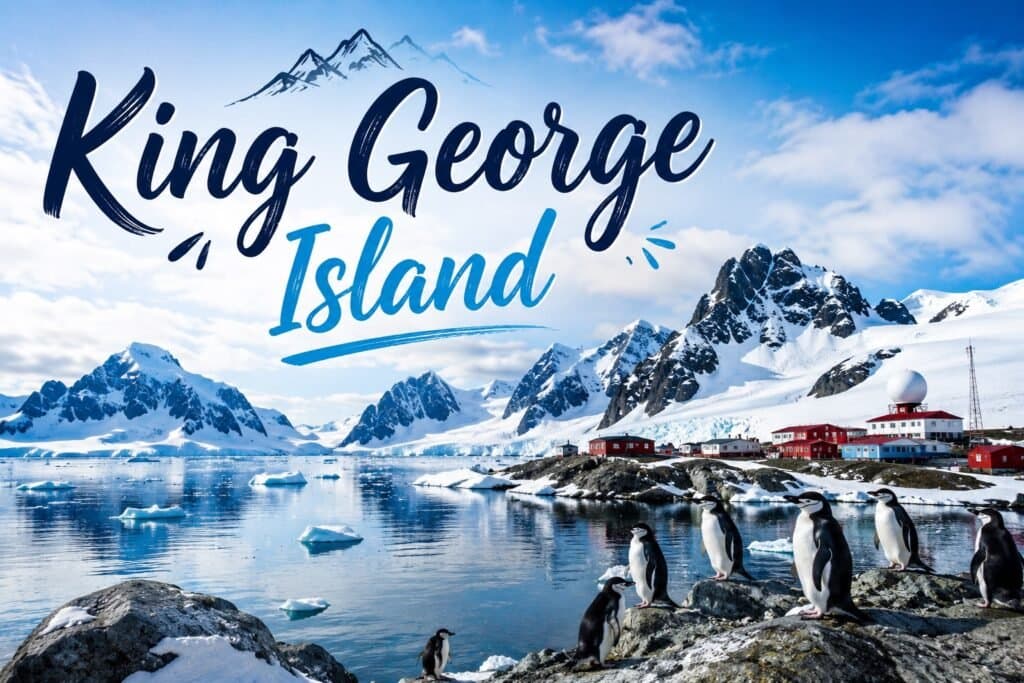
Some places stop you in your tracks the moment you arrive. King George Island is one of them. Glaciers spilling toward the sea, penguins going about their business like you are not even there, a silence so total it almost feels loud — this island isn’t just a destination, it’s a reckoning. For most travellers, it’s the very first thing they see when they reach Antarctica, and honestly? It sets the bar impossibly high.
This King George Island travel guide covers everything worth knowing before you go — the top attractions, what the weather actually feels like, how to get there, and what to stuff into your bag. Let’s get into it.
Is King George Island Part of Antarctica?

A lot of people ask this before booking, and honestly, it’s a fair question. The short answer is yes — technically. King George Island is the largest of the South Shetland Islands, sitting roughly 75 miles off the Antarctic Peninsula. The South Shetlands fall under the Antarctic Treaty System, meaning the island answers to the same international framework that governs the continent itself.
No single country actually owns it. Chile and Argentina both staked territorial claims back in 1940 and 1943, but neither has ever been internationally recognised. Instead, the island functions almost like a shared scientific commons — shaped by the dozen-plus research stations that countries from around the world have set up there.
So yes, geographically speaking, it sits apart from the mainland. But in every other way that matters — ecologically, legally, even in the sheer feel of the place — King George Island is Antarctica, no question about it.
King George Island Antarctica: A Quick Overview

The island was first spotted in 1819 by British mariner William Smith, who named it after King George III. That discovery kicked off decades of commercial activity — sealing, whaling, the usual story — before conservation efforts and the signing of the Antarctic Treaty in 1959 shifted things toward science.
These days, King George Island Antarctica hosts the world’s highest concentration of national research stations. More than ten countries — Argentina, Brazil, Chile, China, South Korea, Peru, Poland, Russia, Uruguay among them — run year-round or seasonal bases here.
That’s why the island has picked up two surprisingly lively nicknames: the “Gateway to Antarctica” and the “Unofficial Capital of Antarctica.” Not bad for a place where over 90% of the land is permanently under ice and snow. The island stretches 59 miles long and 16 miles wide, and every inch of exposed rock feels like a small miracle.
King George Island Weather: What to Expect?

Nobody’s booking this trip for the sunshine. But knowing what King George Island weather actually looks like it will help you prepare properly — and help you enjoy it rather than endure it. Visit during the austral summer, roughly November through February, and you are looking at temperatures between -2°C and 3°C.
By December, daylight stretches to nearly 24 hours. Wildlife is everywhere — penguins nesting, seals basking, whales surfacing offshore — and landing sites are at their most accessible. This is when expedition cruises and fly-cruise trips operate, and for good reason.
Come March and things shift quickly. Temperatures drop to somewhere between -5°C and -10°C, the light fades, and the sea starts to freeze. The tourist season closes up. Winter is strictly researcher territory — dark, extreme, and genuinely forbidding.
Here is a quick breakdown to help you figure out when to go:
| Season | Months | Average Temperature | Best For |
| Austral Summer | November-February | -2°C to 3°C | Wildlife, cruises, accessibility |
| Early Autumn | March | -5°C to – 8°C | Quieter visits, dramatic ice scenery |
| Winter | April-October | -10°C and below | Research staff only |
| Late Spring | October-November | -3°C to 1°C | Early season expeditions |
The sweet spot is November to February. Even then, conditions can flip fast — delays are part of the deal here. Build in flexibility, and don’t fight the weather. It always wins.
Things to Do in King George Island Antarctica

The remoteness is part of the point, but that doesn’t mean there is nothing to do. Here are the things to do in King George Island Antarctica that make the whole journey feel completely worth it.
- Meet the Penguin Colonies
This is what most people come for and it absolutely delivers. King George Island is home to Adélie, chinstrap, and gentoo penguins, often gathered in massive, chaotic, wonderful colonies, especially during breeding season. Watching them waddle around, steal nesting material from each other, and launch themselves into ice-cold water without a second thought is the kind of thing that makes you genuinely laugh out loud. Photos don’t do it justice. You really do have to be standing there.
- Visit the Church of the Holy Trinity
Of all the things you’d expect to find at the bottom of the world, an orthodox wooden church probably isn’t on the list. And yet, there it is. The Church of the Holy Trinity belongs to Russia’s Bellingshausen Station — built in 2004 from Siberian pine, shipped down on an expedition vessel, and staffed by a full-time priest who has apparently decided Antarctica is exactly where he wants to be. It’s the first Orthodox church ever built on the continent, and standing in front of it feels genuinely surreal. A good surreal.
- Explore Penguin Island
Just off the main island, Penguin Island has a completely different energy — volcanic, stark, almost otherworldly. The centrepiece is Deacon Peak, a 170-metre dormant volcano that gives the whole place a Mars-like feel. Adélie and chinstrap penguins breed here in separate corners of the island, while Antarctic terns, skuas, kelp gulls, and southern giant petrels fill the air above. It’s a short excursion, but it packs in geology, birdlife, and views that stick with you.
- Wildlife Watching: Seals and Seabirds
Penguins get all the attention, but the seal population here is just as impressive. Weddell, leopard, and elephant seals haul out on beaches around the island, and spotting a leopard seal gliding through the water — silent, enormous, utterly at ease — is a moment that tends to stay with people. Strict visitor protocols mean you always keep a respectful distance, which actually makes every encounter feel more intimate, not less.
- Tour the International Research Stations
King George Island’s research station scene is unlike anything else on Earth. Scientists from a dozen countries essentially live side by side here, running experiments, sharing resources, navigating the quiet diplomacy of extreme proximity. Some stations open their doors to expedition visitors on occasion — and if yours does, take the opportunity. Seeing what daily life looks like at the bottom of the world is genuinely fascinating. The island even has a marathon course, a concert venue, and family quarters. Life finds a way, apparently.
- Walk Among Mosses and Antarctic Flowers
It sounds understated, and maybe it is — but there’s something quietly extraordinary about finding flowers growing in Antarctica. King George Island is home to the only two native flowering plants on the entire Antarctic Peninsula: Antarctic hair grass and Antarctic pearlwort. Spots like Turret Point have thick moss carpets spreading across cobble beaches, and lichens of vivid orange cling to the rocks. After miles of ice and grey water, that first patch of green lands differently than you’d expect.
What Should I Pack for King George Island?

Packing for Antarctica isn’t like packing for anywhere else. Get it wrong and you won’t just be uncomfortable — you could genuinely be at risk. So this section of the King George Island travel guide gets a little more serious.
Most reputable expedition operators will give you a detailed kit list when you book, and many include essential outer layers — waterproof parkas, rubber boots — as part of the package. But here is what you will want to sort yourself:
- Base layers: Moisture-wicking thermals, ideally merino wool — it handles sweat and cold better than synthetics
- Mid layers: A good fleece and a down jacket; you’ll be grateful for both
- Waterproof shell: Wind-proof, fully waterproof outer jacket and trousers — often provided, but confirm with your operator
- Gloves: Bring two or three pairs. Wet gloves in sub-zero wind are miserable
- Hat and balaclava: Non-negotiable on deck and during landings
- Sunglasses: UV off snow and ice is brutal — don’t underestimate it
- Sunscreen: SPF 50+. Yes, in Antarctica. Yes, really
- Seasickness tablets: Even on a fly-cruise, you will still spend time at sea
- Waterproof camera protection: Condensation and sea spray will find your gear
- Binoculars: For wildlife from the ship and on shore — worth every gram
- Portable charger and adapters: Cabin outlets on expedition ships vary
One thing that catches people off guard: before you step off the zodiac onto the island, you will need to disinfect your boots. Nothing comes onto the island and nothing leaves it — no rocks, no feathers, no “just a small souvenir.” Biosecurity here is taken seriously, and rightly so. King George Island is one of the last places on the planet that genuinely hasn’t been contaminated by human carelessness. Keep it that way.
How to Get to King George Island?

Getting here is a journey in itself but it’s far more doable than most people assume. Chile’s Eduardo Frei Station on the island has an operational airstrip, which completely changed the game for Antarctic travel. Charter flights from Punta Arenas or Puerto Natales cross the Drake Passage in roughly two hours — two hours, compared to the two-day ocean crossing that traditional cruises require.
If you are doing a fly-cruise, the sequence goes like this: you fly in, transfer by zodiac to your expedition ship waiting offshore, and from there sail deeper into Antarctica. You still get the full polar experience — you just skip (or do only one leg of) the Drake. It’s a practical option for anyone short on time or prone to seasickness.
One important detail: only 100 people from any cruise ship are allowed ashore at any one time. That limit exists for conservation reasons, and it’s a strong argument for choosing a smaller expedition vessel over a larger cruise ship. The experience is more personal, more considered, and honestly just better.
To Sum Up
King George Island doesn’t show off. It doesn’t need to. There are no luxury hotels here, no rooftop bars, no curated photo opportunities. Just ice, wildlife, wind, and a landscape that feels genuinely ancient. The kind of place that makes the noise of regular life seem very far away — because it is.
Whether this is your entry point to a longer Antarctic expedition or the whole trip itself, the island has a way of staying with you. Use this King George Island travel guide to plan carefully, pack properly, and go in with no expectations because whatever you imagine, the reality will be stranger and better.
FAQs
Is King George Island part of Antarctica?
Yes. King George Island is part of the South Shetland Islands and falls under the Antarctic Treaty System. Although it lies off the Antarctic Peninsula, it is considered one of Antarctica’s main gateways for visitors and researchers.
What is King George Island famous for?
King George Island is known for its penguin colonies, international research stations, glaciers, Antarctic wildlife, and role as the main gateway for Antarctic expeditions, making it one of the continent’s most visited destinations.
When is the best time to visit King George Island?
The best time to visit is from November to February during the Antarctic summer. Visitors enjoy milder temperatures, long daylight hours, active wildlife, and the best conditions for cruises and shore landings.
How do you get to King George Island?
Most travelers fly from Punta Arenas, Chile, to King George Island in about two hours. Many Antarctic expeditions also combine charter flights with expedition cruises to explore the Antarctic Peninsula.
What wildlife can you see on King George Island?
Visitors can spot Adélie, chinstrap, and gentoo penguins, as well as Weddell, leopard, and elephant seals. Seabirds, whales, and unique Antarctic plant life can also be seen during the summer season.
Do I need special clothing for King George Island?
Yes. Wear waterproof outerwear, thermal base layers, insulated jackets, gloves, hats, sunglasses, and waterproof boots. Proper cold-weather clothing is essential for staying warm and comfortable during Antarctic excursions.
Can tourists visit King George Island?
Yes. Tourists can visit King George Island through licensed Antarctic expedition cruises and fly-cruise tours. Visits are carefully managed under Antarctic Treaty regulations to protect the island’s fragile environment and wildlife.


