India, a land of rich history and culture, is home to a vast number of iconic monuments. These months hold the stories of past empires, kingdoms, and civilizations. These historical monuments not only highlight architectural brilliance but also carry significant cultural and historical value.
Whether it is the grandeur of the Taj Mahal or the ancient fortresses like the Red Fort, these landmarks are not just buildings. They are a testament to India’s glorious past. In this blog, we will explore 10 of the most iconic monuments in India, their history, and their importance.
We will also answer questions like “What is the national monument of India?.” Also providing you the guidance on how to make a model of historical monuments of India for those with a creative flair.
1. Taj Mahal: The Iconic Monument of Love

Location: Agra, Uttar Pradesh
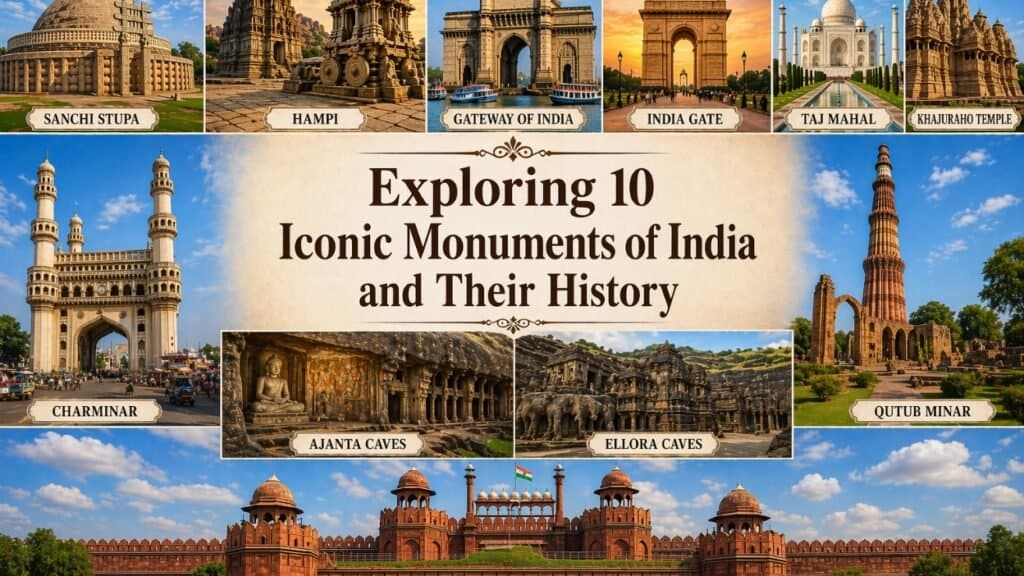
The Taj Mahal, one of the Seven Wonders of the World, is undoubtedly the most iconic monument of India. Built by Emperor Shah Jahan in memory of his wife Mumtaz Mahal, this white marble mausoleum is a symbol of eternal love. Completed in 1653, the Taj Mahal features Persian, Ottoman Turkish, and Indian architectural styles.
Its mesmerizing beauty attracts millions of tourists from all over the world every year. Additionally, the Taj Mahal stands as a testimony to Mughal architecture and is known for its pristine beauty and symmetry. The monument’s historical significance lies not only in its aesthetic appeal. But also in its cultural value as a symbol of love, sacrifice, and the imperial grandeur of the Mughal era.
2. Red Fort: Iconic Monuments That Symbolize India’s Struggle for Freedom

Location: Delhi
The Red Fort, also known as Lal Qila, is one of the most important historical monuments of India. Built by Emperor Shah Jahan in the 17th century, this massive fort served as the residence of Mughal emperors for around 200 years. The fort is an architectural masterpiece, with its red sandstone walls and intricate carvings.
It played a significant role in India’s fight for independence, with the first Prime Minister, Jawaharlal Nehru, hoisting the Indian national flag here on August 15, 1947. Moreover, the Red Fort’s significance extends beyond its architectural beauty. It is a symbol of India’s struggle for freedom and the country’s journey toward independence.
3. Qutub Minar: The Tallest Brick Minaret

Location: Delhi
Standing tall at 73 meters, the Qutub Minar is the tallest brick minaret in the world and a UNESCO World Heritage Site. Built by Qutb-ud-Din Aibak in the early 13th century, the minaret was constructed to mark the beginning of Muslim rule in India.
The Qutub Minar is an example of Indo-Islamic Afghan architecture, with inscriptions in Arabic that highlight the achievements of the ruling sultans. It is not only an architectural wonder but also an important iconic monument that marks the establishment of the Delhi Sultanate.
4. India Gate: The National Monument of India

Location: Delhi
India Gate is the most well-known war memorial in India, dedicated to the soldiers who died during World War I. The archway stands at a height of 42 meters and was designed by Sir Edwin Lutyens. Located in the heart of Delhi, India Gate is the nation’s pride and honor.
It is often referred to as the national monument of India, serving as a tribute to the bravery of Indian soldiers. The flame that burns near the monument, known as the Amar Jawan Jyoti, symbolizes the eternal spirit of the soldiers who gave their lives for the country.
5. Ajanta and Ellora Caves: Ancient Rock-Cut Wonders

Location: Maharashtra
The Ajanta and Ellora Caves are a collection of rock-cut temples and monasteries that date back to the 2nd century BCE. Located in the state of Maharashtra, these caves are renowned for their intricate carvings, paintings, and sculptures that depict the life of Buddha and Hindu gods.
The Ajanta Caves are known for their beautiful murals that are considered masterpieces of ancient Indian art. The Ellora Caves, which feature a blend of Hindu, Buddhist, and Jain temples, are also an important cultural and historical monument, highlighting the diversity of Indian religious practices.
6. Gateway of India: The Majestic Archway

Location: Mumbai, Maharashtra
The Gateway of India was built in 1924 to commemorate the visit of King George V and Queen Mary to India. Located in Mumbai, the monument stands at 26 meters and is an iconic symbol of the city. The grand archway, made of yellow basalt and concrete, blends Hindu and Muslim architectural styles, being the harmonious relationship between diverse cultures in India.
Moreover, the Gateway of India holds immense historical importance, especially as it was from here that the last British troops left India, symbolizing the end of British colonial rule in 1948.
7. Charminar: The Iconic Symbol of Hyderabad’s Heritage

Location: Hyderabad
The Charminar is one of the most iconic monuments in India, known for its grand architecture and historical significance. Built in 1591 by Muhammad Quli Qutb Shah, it stands as a symbol of Hyderabad’s rich cultural heritage. The monument is famous for its four towering minarets, intricate carvings, and Indo-Islamic design.
Located in the heart of the city, Charminar is surrounded by bustling markets like Laad Bazaar, known for bangles, pearls, and traditional items. Visitors can climb to the upper floors for a panoramic view of the old city, making it a popular spot for tourists and photographers.
8. Khajuraho Temples: A UNESCO World Heritage Site

Location: Madhya Pradesh
The Khajuraho Group of Monuments is a UNESCO World Heritage Site known for its stunning temples adorned with intricate carvings. These temples, built by the Chandela dynasty between 950 and 1050 AD, are famous for their detailed sculptures that depict various aspects of life, including religious, social, and sensual themes.
The temples are a unique blend of architecture and sculpture, highlighting the grandeur of medieval India. The Khajuraho temples are a vital part of India’s cultural heritage, attracting tourists from around the world.
9. Hampi: The Lost City of the Vijayanagara Empire

Location: Karnataka
Hampi, the ancient capital of the Vijayanagara Empire, is a UNESCO World Heritage Site and also one of the most impressive historical monuments of India. The city, once known for its wealth and grandeur, is now a collection of magnificent ruins scattered across rocky terrain.
The Vijaya Vittala Temple, with its iconic stone chariot, is one of the highlights of Hampi, highlighting the brilliance of Vijayanagara architecture. Hampi is not just an iconic monument, it is an ancient city that offers a glimpse into India’s rich historical past.
10. Sanchi Stupa: An Iconic Monuments Symbol of Buddhist Heritage

Location: Madhya Pradesh
The Sanchi Stupa, one of the oldest stone structures in India, is a Buddhist monument that dates to the 3rd century BCE. Commissioned by Emperor Ashoka, the stupa is a symbol of peace and enlightenment. Moreover, the stupa is surrounded by beautiful gateways that feature intricate carvings depicting scenes from the life of Buddha.
The Sanchi Stupa holds immense religious significance for Buddhists and is an important landmark in India’s spiritual and cultural history.
How to Make a Model of Iconic Monuments of India?
Making a model of historical monuments of India can be a fun and educational project. Whether you are working on a school assignment or simply exploring your creative side, here is an easy guide to creating a model of any of these famous monuments:
- Select the Monument: Choose a historical monument of India that interests you. Some popular choices include the Taj Mahal, Red Fort, or Qutub Minar.
- Gather Materials: You will need materials like cardboard, clay, plaster of Paris, glue, scissors, paint, and brushes.
- Create a Base: Use cardboard or a wooden board as the base of your model.
- Build the Structure: Use clay or plaster of Paris to build the structure of the monument. Sculpt the minute details like domes, windows, and minarets.
- Paint and Decorate: Once the structure is dry, paint it to match the colors and patterns of the original monument.
- Add Final Touches: Add minute details such as trees, pathways, and decorative elements to complete the look.
Making a model is a fantastic way to appreciate the architectural beauty of India’s historical monuments while also learning about their significance.
To Sum Up
India’s monuments are not just architectural masterpieces, they are the repositories of history, culture, and tradition. From the awe-inspiring Taj Mahal to the ancient ruins of Hampi, these monuments tell the tales of a time long gone but still present in the grandeur of their structures.
As we explore these famous monuments of India, we realize how deeply connected we are to the past and how these historical landmarks help us understand our heritage better. Whether you are an aspiring traveler, a history buff, or someone simply curious about India’s past, these iconic monuments are must-see. Visit them, learn their stories, and let them inspire you.
FAQs
What are Iconic Monuments of India and why are they important?
Iconic Monuments are structures representing India’s culture, architecture, and heritage. They preserve stories of empires, attract tourism, and help people understand the nation’s past.
What are the best Iconic Monuments to visit in India for travelers?
Top choices include the Taj Mahal, Red Fort, Qutub Minar, and Hampi. They offer rich history, stunning architecture, and unforgettable experiences for travelers exploring India’s diverse cultural heritage.
When is the best time to explore Iconic Monuments in India?
The ideal time is October to March, when the weather is pleasant. These months make sightseeing comfortable and enjoyable across major destinations like Delhi, Agra, Rajasthan, and South India regions.
How can travelers plan a trip to multiple monuments efficiently?
Travelers should group destinations by region. Book transport in advance. Follow a flexible itinerary and allow enough time for exploration to make their journey smooth and memorable.
Why are Iconic Monuments important for cultural travel experiences?
These monuments offer insights into India’s history, architecture, and traditions. This allow travelers to connect deeply with local culture and understand the country beyond modern attractions and lifestyles.
What are must-see monuments apart from the Taj Mahal?
Travelers should visit Hampi, Khajuraho Temples, Ajanta Ellora Caves, Gateway of India, and India Gate for a complete experience of India’s architectural diversity and historical richness.
How can travelers capture the best photos at historical monuments?
Visit during early morning or sunset, use natural lighting, explore different angles, avoid crowds, and respect monument rules to capture stunning and memorable travel photographs.
Which Iconic Monuments are best for photography lovers?
The Taj Mahal, Hampi ruins, Khajuraho Temples, and Gateway of India offer stunning visuals, unique architecture, and scenic surroundings perfect for capturing memorable travel photographs.
Useful links:Most haunted places in India · North Goa vs South Goa · Archaeological Survey of India