

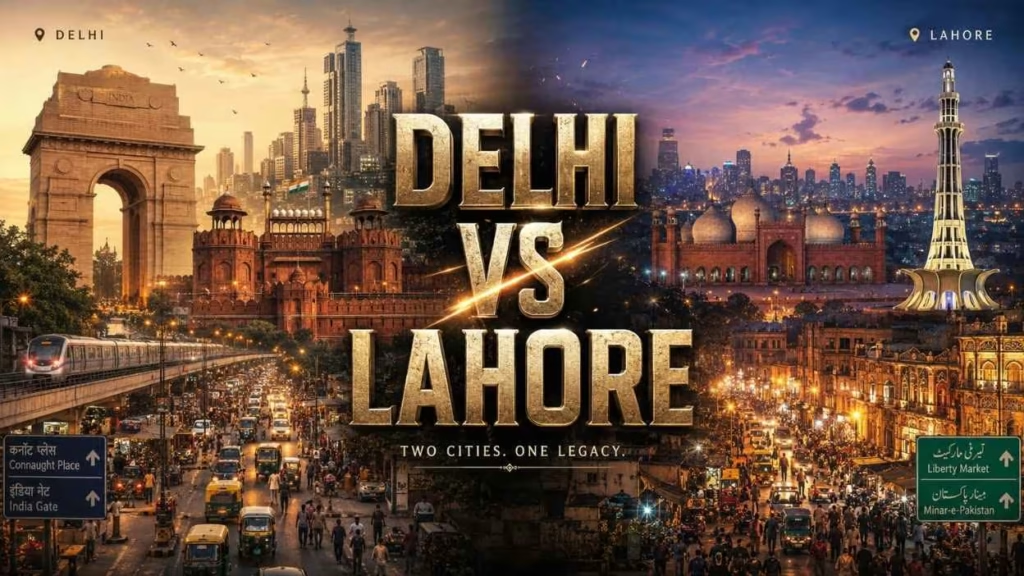
If you are positioned at the heart of Indian subcontinent history, then two names reverberate the most: Delhi and Lahore. These two cities, which are frequently termed twin sisters divided by a border, are the two sides of the same coin, showing the magnificence of the Mughal Empire and the sophisticated layers of colonial and modern South Asian life. The discussion between Delhi vs Lahore is still one of the most captivating cultural confrontations in the world as travelers are already planning to visit these cities in their 2026 itineraries.
Deciding on these two legendary cities is not a question of which one is “better,” but only which kind of history and urban vibrancy goes along with your travel habit. The two cities are nothing short of powerhouses in terms of sensory perception, where the aroma of roasting spices gets blended with the call to prayer, and where ancient fortifications made hundreds of years ago are still visible even in the midst of rapid modernization. This guide takes you through the deep dive of each capital’s similarities, differences, and individual charm.
The Mughal Mirror: Comparing Architectural Legacies

In order to grasp the essence of the comparison between Lahore and Delhi, one has to consider the architectural legacies that the Mughal emperors left behind. The two cities not only were the capitals of the empire but also shared the same magnificent materials, red sandstone and white marble, for their edifices. The most renowned contrast usually starts at the entrances of the main religious sites of both cities.
If we compare jambo masjid delhi and badshahi mosque lahore, it is more like going through a dialogue of two periods. The mosque of jama masjid delhi, which was built by emperor shah jahan in 1656, is an art piece of harmony and size, the place where it is built is an old chaotic delhi area at the top of a hill. Its three grand white marble domes and tall minarets became a benchmark for the Islamic architecture in India.
Nonetheless, Shah Jahan’s son Aurangzeb, after a lapse of seventeen years, constructed the Badshahi Mosque in Lahore in order to outdo the earlier one. The Badshahi Mosque is of such size that it can accommodate more than 100,000 people in its huge courtyard. If the mosque in Delhi has a more personal feeling and is supported by the lively market, Lahore’s mosque is a giant declaration of strength, beautifully placed next to the Lahore Fort. The two places are indispensable for any visitor, providing a combined spiritual and historical depth that is very rare among other destinations on earth.
Modern Metropolises: Lahore vs New Delhi

The present-day experience of Lahore and New Delhi, crossing the ancient stone walls, is a captivating study in urban evolution. New Delhi, India’s capital, is a city full of broad, tree-lined avenues and grandiose government buildings that are a masterpiece of British architect Edwin Lutyens. It is a real nexus of the world, possessing a metro system of international standards, high-end shopping centers, and a lively international diplomatic ambiance. New Delhi is likely to continue its journey toward becoming a green city with the realization of smart city infrastructure, which will mean that by 2026 it will not be so hard for the first timers to South Asia to get around the city.
Lahore, which also possesses magnificent colonial architecture such as the Lahore Museum and the High Court, has a different modern rhythm at the same time. It is the cultural spirit of Pakistan, famous for its “Zinda-Dili” or liveliness of heart. The modern districts of Gulberg and DHA are packed with chic boutiques and luxurious coffee shops that could easily compete with the best ones in the West. At the same time, the city’s infrastructure has managed to retain a somewhat less polished and “raw” over-all charm that is still higher in scale than the government zones of New Delhi, thanks to the Orange Line metro and new expressways.
The Culinary Soul: A Battle of Flavors

In case there is one domain where the tussle between Delhi and Lahore nations gets really intense, it is the kitchen. The two cities assert themselves as the “Food Capital” of the area, and they both have very valid points.
Delhi is the emperor of diversity. Every palate will certainly find a matching flavor in the city ranging from the rich and delicious Butter Chicken and Dal Makhani of its luxury hotels to the hot and spicy Aloo Chaat and Chole Bhature of Chandni Chowk. The city has widely accepted its identity as a melting point, thus, within just one square mile you can have everything from real South Indian dosas to Tibetan momos.
On the contrary, Lahore is a paradise for meat-eaters. The most important part of the city’s food tradition is the famous “Food Streets” which are in Gawalmandi or near the Badshahi Mosque. Nihari, Chargha, and seekh kebabs are just a few of the dishes that have made Lahore’s cuisine famous all over the world. The food in Lahore is generally richer and more traditional in its cooking style with the “Karahi” method being the most preferred. The year 2026 finds the food scenes in both cities alive and flourishing, the new generation of chefs mixing ancient techniques with modern ways of presenting.
Navigating the Chaos: Travel Logistics for 2026

If you are one of those who would like to visit both cities, then the logistics would be a significant part of the adventure. Indira Gandhi International Airport, one of the busiest and best-connected hubs in Asia, offers high accessibility to Delhi. You can visit other famous places like Agra, where the Taj Mahal is, or Jaipur, the pink city, very easily from Delhi.
Lahore, which is the city of Allama Iqbal International Airport, is an ideal place for travelers who want to discover the northern part of Pakistan, such as the Karakoram Highway and the Hunza Valley. In 2026, the Lahore airport is going to connect the world better than before with the more international flights.
The encounter of the two cities through the physical proximity at the Wagah-Attari border is still one of the most peculiar travel adventures in the world. The watching of the “Beating Retreat” ceremony in which the troops of both countries engage in a highly skilled and a set display of bravado is a very touching reminder of the past and the present separation between these two gigantic countries.
Conclusion

If you end up lost in the aromatic spice markets of Old Delhi or looking at the sunset on the minarets of Lahore, then you are getting the most out of South Asia’s wonders. On one hand, Delhi presents a lively, modernized tour encased in layers of history; on the other hand, Lahore takes the visitor on a mellow, old-fashioned trip right into the core of Punjabi culture.
Traveling will be made easier, and the year 2026 will be the same, so why go for one if both can be realized? The bond of these two cities is a tale that has taken centuries to unfold, and one that all international travelers should personally discover.
I’m more than happy to assist you in making a travel checklist that will take care of the visa requirements and all other logistics for your trip to both Delhi and Lahore.
TickYourList is availble for anytime for your help you can easily buy any ticket
FAQ
1. Jama Masjid vs. Badshahi Mosque: Which is more impressive?
While both share Mughal DNA, the Badshahi Mosque in Lahore is significantly larger, holding over 100,000 people compared to Jama Masjid’s 25,000. Jama Masjid sits in the dense heart of Old Delhi’s markets, offering a vibrant, “living” atmosphere, whereas the Badshahi Mosque feels more like a grand, regal sanctuary set apart from the urban noise.
2. Is it expensive to visit Delhi or Lahore?
Both cities are very budget-friendly. Lahore generally offers slightly cheaper street food and textiles, while New Delhi has a wider range of high-end luxury hotels and a highly efficient, low-cost Metro system. Travelers can enjoy a full day of sightseeing and dining in either city for $30–$50 on a mid-range budget.
3. Can I travel directly between the two cities?
There are currently no direct flights or trains between Delhi and Lahore. Most travelers transit through a third city like Dubai or Doha. Alternatively, you can cross the Wagah-Attari land border on foot near Amritsar, which is a popular “bucket list” experience for international tourists.
4. Which city is better for food lovers?
This is the ultimate debate. Delhi is the king of variety, famous for its Butter Chicken, Chole Bhature, and diverse street snacks (chaat). Lahore is a paradise for meat lovers, renowned for its authentic Nihari, Karahi, and smoky, charcoal-grilled kebabs. Both cities have dedicated “Food Streets” that stay open late into the night.
5. What is the best way to get around in 2026?
In Delhi, the Metro is the fastest and most reliable option to avoid heavy traffic. In Lahore, ride-hailing apps like Uber or Careem are the most convenient, though the modern Orange Line Metro is great for visiting key heritage sites. In both cities, a traditional rickshaw ride is a must for navigating the narrow alleys of the Old Cities.


