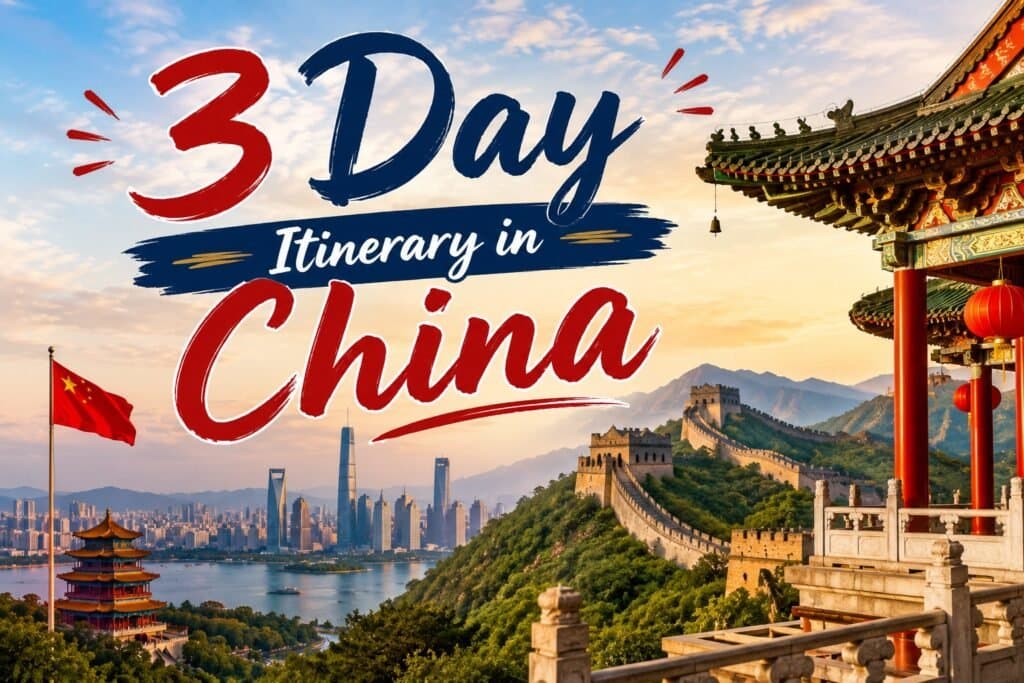
Hey friends and fellow wanderers! If you have ever scrolled through Instagram at 2 a.m. dreaming of standing on the ancient Great Wall as mist rolls over endless mountains, staring into the lifelike eyes of thousands of Terracotta Warriors, hand-feeding bamboo to adorable giant pandas.
Or drifting along a river surrounded by surreal karst peaks straight out of a traditional Chinese painting and finally watching the neon lights of a futuristic metropolis dance on the water then this comprehensive 14-day China travel itinerary is written for you.
China is not just a country; it is a continent-sized civilization with over 5,000 years of history, 56 ethnic groups, wildly different cuisines, landscapes that shift from deserts to tropical rice terraces, and a pace of modern development that feels science-fiction.
One moment you are bowing in a 600-year-old temple, the next you are riding a bullet train at 350 km/h past gleaming skyscrapers. This itinerary curated for first-time visitors who want depth without total exhaustion. It balances must-see icons with breathing room, cultural immersion with modern comfort, and famous sights with hidden local gems.
Why This Particular Route Works So Well?

The Classic Loop – Beijing → Xi’an → Chengdu → Guilin/Yangshuo → Shanghai
This north-to-southwest-to-east route is a sweet spot for first-timers because it flows logically with efficient transport connections and gives you a rich cross-section of China’s diversity:
- Beijing (Days 1-4): Imperial power, grand architecture, and the iconic Great Wall.
- Xi’an (Days 5-6): Ancient capital atmosphere and one of the greatest archaeological discoveries on Earth.
- Chengdu (Days 7-8): Laid-back Sichuan lifestyle, world-famous pandas, and fiery food culture.
- Guilin & Yangshuo (Days 9-11): Jaw-dropping natural scenery that inspired countless poems and paintings.
- Shanghai (Days 12-14): Ultra-modern contrast, colonial history, and a perfect international departure point.
Why are we skipping Zhangjiajie (and other alternatives)?
Zhangjiajie’s towering sandstone pillars (the real-life Avatar mountains) are breathtaking but reaching them usually requires an extra flight and more physical energy. For most people on a tight 14-day schedule, the fatigue is not worth it.
If raw nature is your absolute priority, you could replace Chengdu with Zhangjiajie — but you would miss the pandas and relaxed Sichuan vibe. Other popular swaps include adding a Yangtze River cruise or extending time in Guilin for hiking.
This itinerary minimizes long travel days while maximizing “wow” moments. High-speed trains and short domestic flights make everything feel seamless.
Pre-Trip Essentials – Everything You Need to Know in 2026

Visa, Entry & Current Rules As of 2026, many nationalities (US, UK, EU, Australia, Canada, Japan, etc.) enjoy 30-day visa-free entry for tourism. Some airports offer 240-hour visa-free transit. Always check the latest on the Chinese embassy website or Trip.com, carry proof of onward travel, and have your hotel bookings ready. Print a copy of your itinerary — immigration officers appreciate it.
Essential Apps & Tech Setup (Download Before Landing)
China’s digital ecosystem is incredibly advanced but can be tricky for foreigners without preparation:
- Alipay & WeChat Pay: Link your Visa/Mastercard in the international version. You will use these for everything from street vendors to metro tickets.
- Didi: Reliable and cheap taxis with English support.
- Trip.com: Best for booking trains (you need your passport number), flights, attractions, and even airport transfers.
- Amap (Gaode) + Google Translate with offline Chinese language pack.
- VPN: Must-have (ExpressVPN, Astrill, or LetsVPN). Without it, Google, WhatsApp, Instagram, and YouTube will not work. Test it before you fly.
- Pleco or iTranslate for on-the-go translation.
Money, SIM/eSIM, Health & Safety
China is cashless but carry 500–1000 RMB for small rural vendors or temples. ATMs are widespread. Get a local eSIM upon arrival (China Mobile or Airalo works well). Safety-wise, China stays one of the safest large countries for tourists — low violent crime, heavy police presence, and helpful locals.
However, watch for pickpockets in crowded tourist spots like the Muslim Quarter or Nanjing Road. Drink only bottled or filtered water. Air quality can be an issue in winter (use apps like AirVisual). Food hygiene is good in tourist areas, but ease into spicy Sichuan food gradually.
Best Time to Visit & What to Pack
Spring (March–May) and autumn (September–November) offer pleasant weather and fewer crowds. Summers are hot and humid (especially in the south), winters cold in the north.
Packing list:
- Comfortable broken-in walking shoes (you will easily hit 15,000–20,000 steps most days)
- Layers for temperature changes
- Power bank (10,000mAh+), universal adapter, reusable water bottle
- Modest clothing for temples
- Portable Wi-Fi egg or extra eSIM as backup
- Medications, basic first aid, and any personal prescriptions (with copies of labels)
- Rain jacket (especially for Guilin) and small daypack
Realistic Budget Breakdown (Mid-Range, Per Person)
$1,800 – $2,800 USD excluding international flights.
- Domestic transport: $350–550
- 3–4-star hotels: $60–120 per night
- Meals: $25–45 per day (mix of street food and restaurants)
- Attractions & tours: $250–450
- Shopping & extras: $200+
Budget travelers can shave it down to $1,400 by using hostels and public transport. Luxury version easily exceeds $4,000 with private drivers and 5-star hotels.
Detailed Day-by-Day Itinerary with Insider Tips
Days 1–4: Beijing – Where Ancient Empire Meets Modern Capital
Base yourself in Qianmen or Wangfujing — walkable, great metro access, and surrounded by food.
- Day 1: Start at massive Tiananmen Square, then spend 3–4 hours inside the Forbidden City. The sheer scale and intricate details (golden roofs, carved dragons, imperial gardens) will leave you speechless. Evening: Wander hutongs for local life, try jianbing (savory breakfast crepe) or Peking duck at a reputable spot like Quanjude.
- Day 2: Temple of Heaven in the morning (join locals doing tai chi or flying kites), then Summer Palace for lakeside walks and the famous marble boat.
- Day 3: Mutianyu Great Wall (highly recommended overcrowded Badaling). Take the cable car up, hike 1–2 hours along the wall, and toboggan down. The views on a cloudless day are life changing. Pack snacks or book a private guide for deeper history.
- Day 4: Relaxed morning in 798 Art District (contemporary galleries in old factories) or more hutong exploration. Evening high-speed train to Xi’an (comfortable 4.5-hour ride).
Nuance: Beijing traffic and smog can be challenging — start early and use the metro. Jet lag hits hard; build in rest time.
Days 5–6: Xi’an – Living History & Street Food Heaven
Stay inside or near the city walls for atmosphere.
- Day 5: Early visit to the Terracotta Warriors (book timed tickets). The scale — over 8,000 unique figures — is mind-blowing. Afternoon: Rent a bike and cycle the 14km ancient City Wall at sunset.
- Day 6: Muslim Quarter for lamb skewers, roujiamo (Chinese hamburger), biangbiang noodles, and pomegranate juice. Visit the Grand Mosque and Shaanxi History Museum. End with a Tang Dynasty dinner show.
Days 7–8: Chengdu – Pandas, Spice & Slow-Paced Sichuan Life
Fly or train (2–3 hours). Stay near Jinli Street or Kuanzhai Alley.
- Day 7: Chengdu Panda Base early (pandas are most active before 10 a.m.). Watch them tumbling, eating, and climbing. Optional volunteer program is expensive but unforgettable. Afternoon: People’s Park for tea, ear cleaning, and mahjong.
- Day 8: Wuhou Shrine, Jinli Ancient Street, and a proper Sichuan hotpot experience. Ask for “xiao la” (mild) if needed. Consider a half-day trip to see the Leshan Giant Buddha.
Days 9–11: Guilin & Yangshuo – Nature’s Masterpiece Short flight to Guilin.
- Day 9: Elephant Trunk Hill and illuminated Reed Flute Cave.
- Day 10: Iconic 4-hour Li River Cruise to Yangshuo — this is many travelers’ favorite day in China.
- Day 11: Rent bikes or e-bikes to explore countryside, Moon Hill, and Yulong River. Stay in a charming riverside guesthouse with rice paddy views. Optional bamboo rafting or light show at night.
Days 12–14: Shanghai – Where Old Meets Ultra-Modern Stay on or near The Bund.
- Day 12: Classic Bund walk at sunrise/sunset, Yu Garden, and Nanjing Road shopping.
- Day 13: Explore the trendy French Concession (cafés, boutiques), Tianzifang artsy lanes, or take a day trip to Zhujiajiao water town.
- Day 14: Morning market or museum visit, xiaolongbao farewell lunch, then departure.
Food Across China – A Deep Dive into Regional Flavors

China’s cuisine changes dramatically by region. Beijing offers hearty northern dishes, Xi’an brings Muslim-influenced spices, Chengdu delivers numbing heat, Guilin focuses on fresh and light, and Shanghai blends influences with refined techniques.
Try cooking classes in Chengdu or Yangshuo — you will learn knife skills, wok breathing, and the balance of flavors. Vegetarian and vegan travelers: use phrases like “wo chi su” and always double-check. Street food is cheap ($2–5 per meal) but follow busy stalls for freshness.
Transportation, Common Mistakes & Customization Ideas

Getting Around Efficiently High-speed trains are the star — smooth, punctual, with hot water for noodles. Domestic flights are affordable when booked early. Within cities, metro systems are clean and English-friendly. Avoid renting cars unless you have an international license and speak Chinese.
Common Pitfalls to Avoid
- Over-scheduling (leave buffer time)
- Not using VPN or translation apps
- Ignoring weather (Guilin rain, Beijing dust)
- Expecting fluent English everywhere
Customizing for Different Travelers Families: Prioritize pandas and Wall toboggan. Solo females: Very safe but use Didi at night. Seniors: Choose cable cars and shorter walks. Foodies: Add multiple cooking classes. Photographers: Golden hour at the Wall and Li River.
Cultural Respect, Sustainability & Final Reflections

Remove shoes when asked, never point feet at Buddha statues, and ask permission for photos. Support responsible tourism — choose panda bases focused on conservation, eco-friendly rafting in Yangshuo, and plastic-free options.
This 14-day journey will show you China’s incredible contrasts, warm hospitality despite language barriers, and rapid evolution. You will return changed with new perspectives, favorite foods, and stories you will retell for decades.
FAQs
Is 14 days enough to visit China for the first time?
Yes, 14 days is ideal for first-timers. It allows you to comfortably explore Beijing, Xi’an, Guilin, and Shanghai while avoiding burnout and enjoying a balanced pace.
What is the best time to visit China for a 14-day trip?
The best time is spring (March–May) or autumn (September–October). These months offer pleasant weather, fewer crowds, and beautiful scenery across all destinations.
Do I need a visa to travel to China?
Yes, most nationalities require a tourist visa. Apply at least 3–4 weeks before travel. Visa-free transit is available for some countries for up to 144 hours.
How much does a 14-day trip to China cost?
A comfortable 14-day China trip costs $1,800–$2,800 per person including flights, mid-range hotels, meals, trains, and attractions. Budget travelers can do it under $1,500.
Is it easy to travel around China with language barriers?
Language can be challenging outside big cities. Use translation apps like Google Translate or Pleco. High-speed trains and ride-hailing apps (Didi) make travel surprisingly convenient.
What are the must-visit places in a 14-day China itinerary?
Top highlights include the Great Wall and Forbidden City in Beijing, Terracotta Warriors in Xi’an, Li River cruise in Guilin, and the Bund in Shanghai.
Should I buy a China SIM card or use eSIM?
Yes, get a local SIM or eSIM on arrival for affordable data. China Unicom and China Mobile offer good tourist packages with WeChat Pay and navigation support.
Useful links:Hong Kong to Macau ferry · Ocean Park ticket prices · China Discovery visa info